2026 Top BASF Chemicals Innovations and Trends to Watch?
In the ever-evolving landscape of the chemical industry, "BASF chemicals" stands at the forefront of innovation. According to recent reports by Research and Markets, the global chemicals market is expected to reach $5 trillion by 2026, driven by sustainable practices and advanced technologies. BASF’s commitment to research and development positions them as a leader in addressing challenges like carbon emissions and resource efficiency.
Emerging trends indicate a significant shift towards bio-based chemicals and circular economy models. A study from the World Economic Forum highlights that renewable chemical production could reduce greenhouse gas emissions by up to 50%. BASF is actively investing in projects that align with these trends, showcasing their adaptability and forward-thinking approach. However, the journey is not without hurdles; competition intensifies, and regulatory landscapes evolve rapidly, necessitating constant innovation.
BASF’s focus on sustainability not only enhances their product lineup but also meets the rising consumer demand for environmentally responsible solutions. As we look towards 2026, the advancements in BASF chemicals will play a crucial role in shaping the future of the industry, while prompting ongoing reflection on their impact and responsibilities within a complex global market.

Innovations in Sustainable Chemical Production by BASF
The journey towards sustainable chemical production is vital. In recent years, many companies have prioritized eco-friendly innovations. The focus is on reducing carbon footprints and energy consumption. Chemicals that follow sustainable practices are becoming important in global markets. They hold the potential to revolutionize industries.
Advancements in biotechnologies are notable. Using renewable resources for chemical synthesis is a game changer. More companies adopt circular economy principles. This minimizes waste and enhances material reuse. However, challenges remain in scaling these technologies. Integration into traditional production lines can be tricky. Not only is this a technical hurdle, but the costs can also be daunting.
Sustainability is not merely a trend but a necessity. Continuous investment in research helps drive change. Efforts in this direction reflect a commitment to a greener future. However, real impact will depend on collaboration among stakeholders. Balancing innovation with practicality is key. Future progress must address both environmental and economic concerns.
Key Product Launches and Technological Advancements for 2026
As we approach 2026, the chemical industry is brimming with exciting innovations and trends. Companies are focusing on sustainable solutions and advanced materials to meet global demands. Key product launches will spotlight eco-friendly alternatives and cutting-edge technologies that enhance performance. For instance, innovations in biodegradable plastics are gaining traction, aiming to reduce environmental impact.
Advanced manufacturing techniques are also on the rise. Automation and AI integration are streamlining production processes, leading to increased efficiency. Companies are exploring nanotechnology to create stronger and lighter materials. These advancements could revolutionize industries such as automotive and construction. However, implementation poses challenges. Organizations must balance innovation with practical aspects.
Tips for professionals in the sector: Stay updated on market trends and consumer preferences. Regularly attend industry conferences to network and gain insights. Embrace continuous learning to adapt to evolving technologies. A forward-thinking mindset will be crucial in navigating the complex landscape of chemical innovations.
2026 Top Chemicals Innovations and Trends to Watch
| Innovation |
Category |
Launch Date |
Impact Area |
Remarks |
| Bio-based Polyethylene |
Sustainable Materials |
Q1 2026 |
Packaging |
Reduces carbon footprint significantly. |
| Advanced Water Filtration System |
Environmental Technology |
Q2 2026 |
Water Treatment |
Enhances purification efficiency. |
| Eco-friendly Adhesives |
Adhesives |
Q3 2026 |
Construction |
Non-toxic and biodegradable. |
| Smart Coatings |
Coatings and Sealants |
Q4 2026 |
Automotive |
Self-healing and stain-resistant. |
| Recyclable Composite Materials |
Composites |
Q1 2026 |
Aerospace |
Lightweight and environmentally friendly. |
Impact of Digitalization on BASF's Chemical Processes
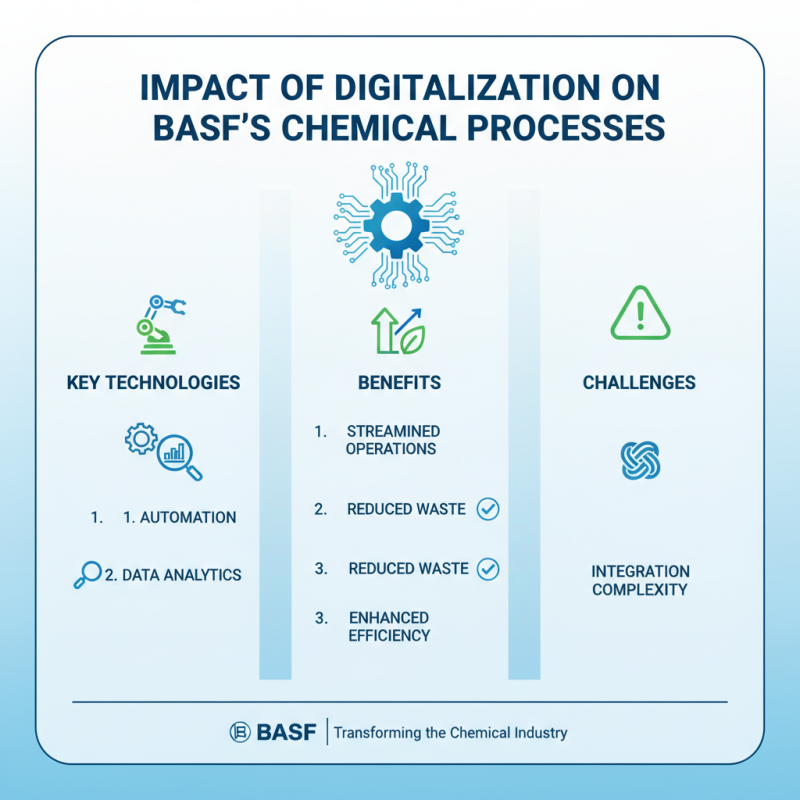
Digitalization is transforming the chemical industry. For BASF, this means integrating advanced technologies into their processes. Automation and data analytics play a crucial role. These tools help streamline operations, reduce waste, and enhance efficiency. However, the journey isn’t without challenges.
Implementing digital solutions requires significant investment. Traditional methods often clash with new technologies. Employees may resist changes, fearing job losses or increased complexity. Training is essential to mitigate these concerns. Companies must adapt their workforce to thrive in a digital environment. Not every transition goes smoothly; trials and errors are likely.
Real-time data analysis improves decision-making. Predictive maintenance reduces downtime. However, reliance on technology poses risks. Cybersecurity threats can jeopardize sensitive information. Balancing innovation with security is critical for sustainable growth. The impact of digitalization on BASF's processes could have lasting implications on the industry.
Emerging Market Trends Shaping BASF's Chemical Innovations
The chemical industry is undergoing rapid transformation. Emerging market trends profoundly shape innovations, urging companies to adapt. According to a recent report, the global specialty chemicals market is expected to reach $1 trillion by 2025. This growth is spurred by sustainability initiatives and the demand for advanced materials.
Sustainable practices dominate the conversation. Consumers and businesses alike prioritize eco-friendly solutions. A 2022 study indicated that 70% of companies actively seek greener options. This shift influences research and development in the chemical sector. Innovations are focusing on bio-based materials and circular economy approaches. Many manufacturers are investing in renewable resources to meet the changing landscape.
Yet, challenges persist. Despite the progress, the transition to sustainable practices can be slow. Some organizations struggle with implementation. Regulatory hurdles also complicate advancements. While the trajectory is promising, the frequency of setbacks raises questions about industry readiness. Addressing these issues is crucial for future success. The balance between innovation and sustainability will be pivotal in shaping the next wave of chemical advancements.
Collaborations and Partnerships Influencing BASF's Research Agenda
In the evolving landscape of chemical innovations, collaborations and partnerships play a pivotal role. BASF’s efforts in research and development are increasingly shaped by strategic alliances. According to a recent market analysis, partnerships in the chemical sector have surged by 40% over the past five years. This trend underscores the importance of combined expertise in addressing complex challenges.
One notable development is the joint efforts with startups and academic institutions that foster creativity. By working together, they aim to enhance sustainable practices and create innovative products. The European Chemical Industry Council noted that partnerships can significantly decrease research timelines by up to 30%. This acceleration is crucial as companies strive to meet stringent regulations and customer demands for greener solutions.
However, not every collaboration achieves its goals. Sometimes, mismatched objectives can hinder progress. Ensuring effective communication and a shared vision remains a challenge. As the industry moves forward, the emphasis on collaboration must be continuously evaluated. Seeking effective partnerships may lead to breakthroughs, but they require careful consideration and alignment of interests to truly succeed.