
7 Best Superior Chemical Solutions for Global Buyers?
Choosing a chemical supplier is rarely just a price comparison. Buyers must match product specifications to real processes, equipment, and quality targets. A solution that performs well in one plant may require extra testing or adjustments in another. That is worth remembering.
This guide introduces seven superior chemical solutions for global buyers, with attention to practical selection criteria rather than sweeping promises. Look closely at specification sheets, safety data sheets, batch traceability, packaging options, and technical support. These details can reveal whether a product fits your production line, storage conditions, and delivery schedule. Small mismatches matter. A drum size that complicates handling or a delayed certificate can affect daily operations.
International purchasing adds another layer of care. Documentation, transport arrangements, and applicable requirements can vary by destination and product category. Buyers should confirm current local obligations with qualified professionals before placing an order. The strongest option is not always the most complex or expensive. It is the one whose performance, documentation, and supply plan fit the intended use. No shortlist is perfect. Product data may not reflect every operating condition, so trials and supplier discussions remain useful. The options ahead offer a starting point for comparing capabilities, asking sharper questions, and choosing with more confidence.
How Global Buyers Define a Superior Chemical Solution
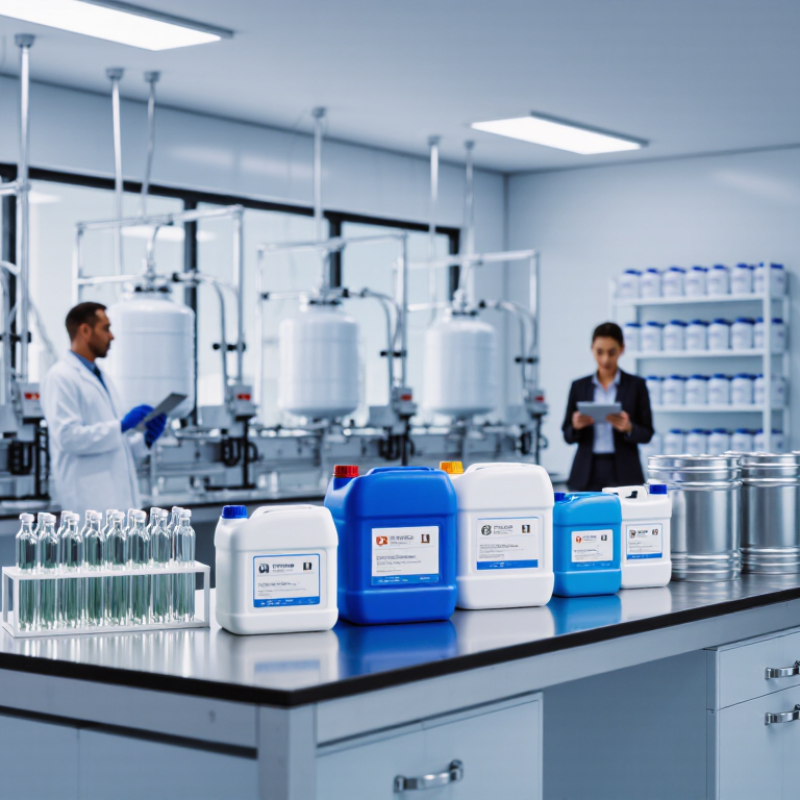
A superior chemical solution is not simply the lowest-priced drum or the fastest quotation. Buyers need consistent performance, clear specifications, dependable delivery, and safety information that matches the product supplied. UNEP’s Global Chemicals Outlook II reported global chemical sales of US$5.68 trillion in 2017, excluding pharmaceuticals, and projected further growth. At that scale, even a small inconsistency can affect production schedules, product quality, or waste.
Look beyond the brochure. Ask for batch-level certificates of analysis, storage guidance, and evidence that the solution performs under your actual temperature and process conditions. Check how the supplier handles a delayed shipment or an out-of-specification batch. Details matter. The International Energy Agency’s 2018 Future of Petrochemicals report identifies chemicals and petrochemicals as the largest industrial energy consumer. That makes resource use and process efficiency practical buying criteria, not just environmental talking points. A tidy certificate folder is not proof of a good fit; real-world trials still matter. And no scorecard captures every production constraint. Buyers should record both measurable results and unresolved concerns before committing to long-term supply.
7 Best Superior Chemical Solutions for Global Buyers? — How Global Buyers Define a Superior Chemical Solution
| Chemical Solution | Representative Chemistry | Common Applications | Buyer Value | Key Evaluation and Sourcing Checks |
|---|---|---|---|---|
| Water-Treatment Coagulants and Flocculants | Aluminum or iron salts; polyacrylamide flocculants | Drinking-water treatment, industrial process water, and wastewater clarification | Can help aggregate suspended particles and improve settling or filtration when correctly selected and dosed. | Confirm active content, grade, performance in representative jar tests, residual limits, application approvals, and compatibility with the treatment process. |
| Surfactants | Anionic, nonionic, and amphoteric surfactant classes | Detergents, industrial cleaners, personal-care formulations, and selected oilfield applications | Provide functions such as wetting, detergency, emulsification, or foam control, depending on the chemistry. | Check active matter, performance at the intended pH and water hardness, foam profile, biodegradability requirements, and formulation compatibility. |
| Industrial Solvents | Alcohols, ketones, and esters, such as ethanol, acetone, and ethyl acetate | Coatings, cleaning, extraction, inks, and chemical processing | Offer application-specific solvency and evaporation characteristics for dissolving, cleaning, or processing materials. | Verify purity, water content, evaporation profile, flash point, VOC requirements, packaging, and applicable dangerous-goods transport rules. |
| Corrosion Inhibitors | Organic inhibitors, phosphonates, and other system-specific inhibitor chemistries | Cooling-water systems, closed-loop systems, boilers, and selected oil and gas operations | Can reduce corrosion when the inhibitor, dosage, water chemistry, and metal surfaces are properly matched. | Assess metallurgy, operating temperature, water chemistry, dosage range, compatibility with other treatment chemicals, monitoring needs, and discharge limits. |
| Resins and Coating Chemicals | Epoxy, acrylic, and polyurethane resin systems | Protective coatings, adhesives, flooring, and industrial surface finishing | Can provide adhesion, barrier protection, or film-forming properties tailored to the substrate and service environment. | Review solids content, viscosity, cure conditions, substrate compatibility, service-temperature range, shelf life, and safety information for all components. |
| Industrial Acids and Alkalis | Sulfuric acid, hydrochloric acid, and sodium hydroxide | pH adjustment, neutralization, pickling, cleaning, and chemical manufacturing | Support essential process operations where concentration and chemical compatibility are controlled. | Confirm concentration, impurity limits, compatible storage and transfer equipment, packaging integrity, safety data, and destination-specific transport requirements. |
| Fertilizer Chemicals | Urea, ammonium phosphate fertilizers, and potassium salts | Agriculture and production of blended or compound fertilizers | Supply nitrogen, phosphorus, or potassium nutrients in forms suited to the crop, soil, and application method. | Check guaranteed nutrient analysis, solubility, moisture, particle-size consistency, storage stability, and applicable local fertilizer registration rules. |
How buyers define “superior”: The best fit depends on the intended process, verified quality documentation, consistent supply, safe handling, total landed cost, and compliance with the rules of the destination market. Confirm specifications and suitability for the exact application before purchase.
Related Posts
-

Top Carolina Chemicals Suppliers for Global Buyers
-
Why Choose China for Superior Chemical Solutions?
-
2026 Best Carolina Chemical Suppliers for Global Buyers
-
Essential Tips for Effective Chemical Blending Techniques?
-

10 Best Superior Chemical Solutions Suppliers Worldwide
-

10 Best Superior Solvents and Chemicals Suppliers?