How to Choose the Right Chem Supply for Your Laboratory Needs?
Choosing the right chem supply for your laboratory can be daunting. With numerous options available, finding the best fit for your needs is crucial. The quality of chemicals can significantly affect your experiments and results. This decision impacts your research and overall lab efficiency.
Reliable suppliers offer high-quality products that meet industry standards. They provide detailed information about their chem supply, ensuring you make informed choices. When selecting, consider factors like purity, availability, and technical support. Evaluate your specific requirements to avoid common pitfalls in lab work.
Even experienced scientists may struggle with these choices. Mistakes can lead to disruptions in workflow or compromised research. Engaging with knowledgeable suppliers can enhance your understanding of the best options. A strong partnership with a trusted chem supply vendor is essential for successful laboratory operations.

Understanding Your Laboratory's Specific Chemical Requirements
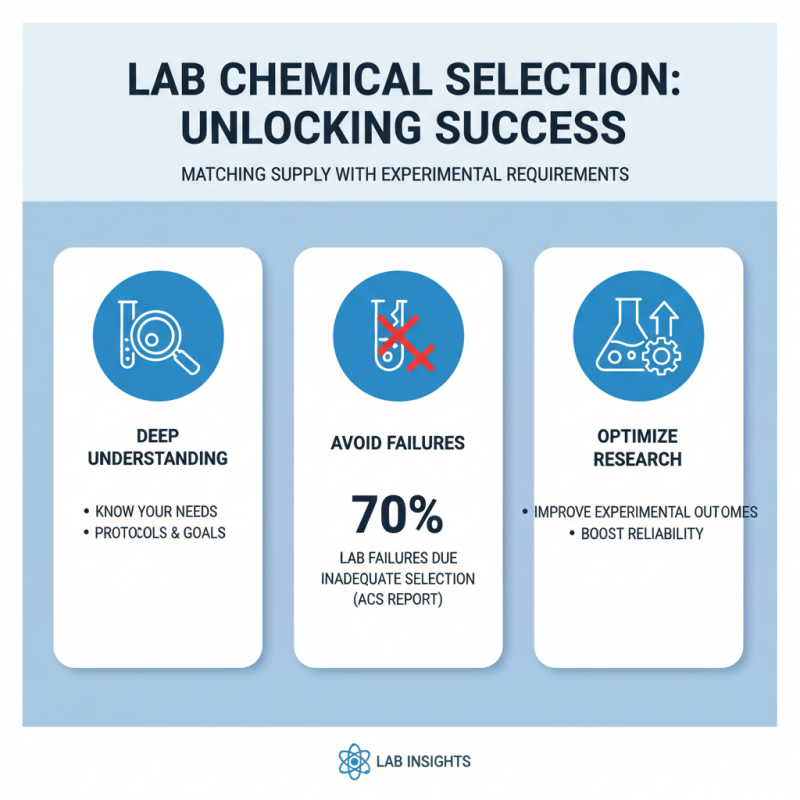
Selecting the right chemicals for your laboratory requires a deep understanding of your specific needs. Each laboratory has different protocols and goals that dictate the type of chemicals required. According to a recent report by the American Chemical Society, approximately 70% of lab failures occur due to inadequate chemical selection. This statistic underlines the importance of matching chemical supply with experimental requirements.
Consider the applications of the chemicals. Will you be conducting analyses, synthesizing compounds, or performing toxicology studies? Each application demands its own set of chemicals, which should be chosen with precision. For example, a study from the National Institutes of Health highlights that precision in chemical selection can improve experimental accuracy by 65%. Understanding the grade, purity, and safety requirements for each chemical is essential.
It's also crucial to assess inventory management and storage facilities. Many labs struggle to maintain optimal chemical stock, leading to waste or shortages. A survey by the Laboratory Safety Institute found that 50% of laboratories reported issues with outdated chemicals. This not only affects research outcomes but can also pose safety risks. Regular audits of chemical inventory ensure compliance and mitigate hazards. Focus on these aspects will steer your laboratory toward better outcomes.
Evaluating Supplier Credentials and Compliance with Safety Standards
When selecting a chemical supplier, the focus on supplier credentials and safety compliance is paramount. A recent report by the American Chemical Society indicates that 70% of laboratory incidents can be traced back to unsafe chemical procurement. Therefore, validating a supplier's credentials is essential for ensuring safe operations. Look for certifications such as ISO 9001, which demonstrates a commitment to quality management systems. Suppliers should also provide Material Safety Data Sheets (MSDS) for each chemical, detailing handling, storage, and emergency measures.
Understanding compliance with safety standards is crucial. The Occupational Safety and Health Administration (OSHA) reports that proper compliance training reduces workplace accidents by 40%. Ensure the supplier's adherence to local and international safety regulations. This includes proper labeling, safe transport, and appropriate disposal methods. Suppliers should undergo regular audits and inspections to verify their safety practices.
Not all suppliers prioritize transparency. Some may lack updated documentation or clear communication, leaving buyers in the dark. A supplier with poor feedback or limited certifications raises red flags. It's important to continuously evaluate suppliers, not just at the outset. A trusted supplier will be proactive and responsive, ensuring that the chemicals used in your laboratory are reliable and compliant.
Comparing Pricing Structures and Delivery Options for Chemical Supplies
When selecting chemical supplies for your laboratory, pricing structures and delivery options are crucial elements. According to the latest industry report by the American Chemical Society, labs can save an average of 15% by comparing suppliers. Many suppliers offer tiered pricing based on order volume. Smaller labs often miss out on bulk discounts, which can significantly impact their budgets over time. It’s vital to evaluate how your purchasing volume aligns with a supplier’s pricing models.
Delivery options also play a key role in supply chain efficiency. A survey conducted by Lab Supply Insights indicates that 30% of lab managers experience delays due to shipping issues. Fast delivery services can enhance laboratory productivity. However, these services often come at a higher cost. The challenge lies in balancing speed against expenses. Many laboratories report that higher shipping fees can outweigh the benefits of expedited delivery.
Labs must continually reassess their suppliers against changing needs. Regularly reviewing both pricing structures and delivery reliability ensures that you maximize your resources. Commitment to finding the right balance takes time and effort, but it can lead to substantial improvements in lab operations. Making informed choices leads to better outcomes in experiments and research projects. This ongoing evaluation fosters a culture of excellence and adaptability within scientific environments.
Assessing Quality Control Measures and Certifications of Chem Supply
When selecting chemical supplies for your laboratory, it's crucial to assess quality control measures and certifications actively. A reliable supplier will often provide documentation for their products. This includes safety data sheets and certificates of analysis, which indicate the purity and composition of the chemicals. Understanding these documents can prevent costly mistakes during experiments.
Certifications also play a significant role in sustaining laboratory safety and compliance. Look for suppliers who adhere to internationally recognized standards. ISO certifications can indicate a commitment to quality and safety. However, not all suppliers are transparent about their certifications. It requires asking the right questions and doing thorough research.
Remember, relying just on a supplier’s reputation can be misleading. Be proactive in verifying their claims. Sometimes, suppliers may present impressive standards while neglecting real-world performance. Evaluating their production processes or speaking to previous customers can provide invaluable insights. This diligence will help you choose a supplier that meets your specific laboratory needs effectively.
How to Choose the Right Chem Supply for Your Laboratory Needs?
| Dimension |
Quality Control Measure |
Certification |
Notes |
| Purity Level |
HPLC Testing |
ISO 9001 |
Ensures higher fidelity in applications. |
| Safety Data Sheets |
GHS Compliance |
GHS |
Important for hazardous materials handling. |
| Traceability |
Unique Batch Numbers |
ASTM Compliance |
Facilitates product recall if necessary. |
| Testing Methods |
Mass Spectrometry |
FDA Approval |
Verifies results accuracy and reliability. |
| Reagent Sourcing |
Supplier Validation |
GLP |
Ensures high-quality inputs for experiments. |
Investigating Customer Support and Technical Assistance Resources Available
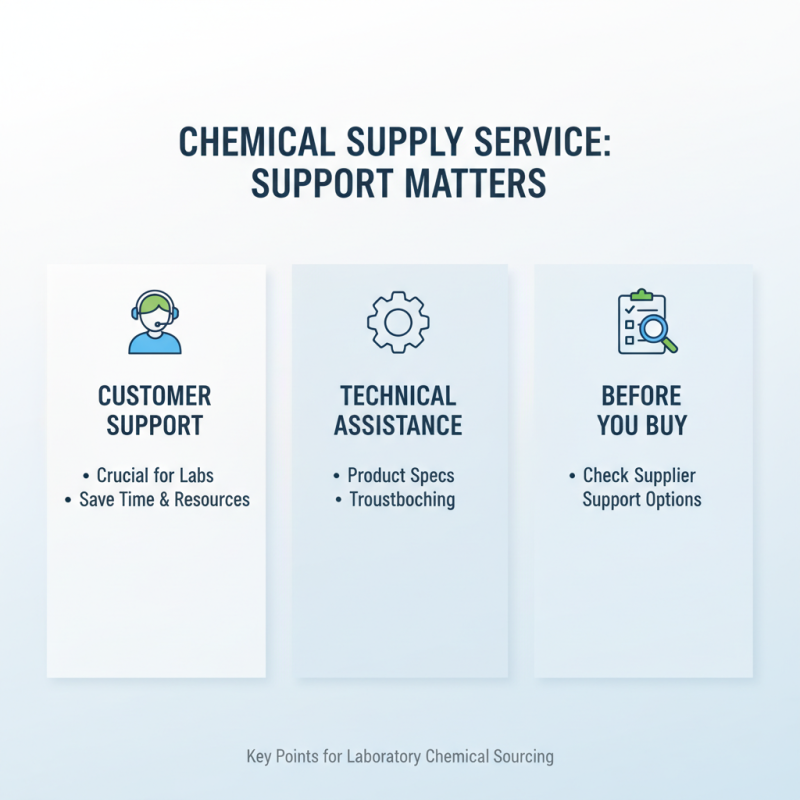
When selecting a chemical supply service for your laboratory, customer support is crucial. Technical assistance can be a game changer. Whether you need help with product specifications or troubleshooting, effective support can save time and resources. Checking how suppliers provide support before purchasing is vital.
Tips: Evaluate their response time. A quick reply shows their commitment.
Many suppliers offer online resources like FAQs or user guides. These can help you understand products better. However, not all support channels are equally effective. Some companies lack clear communication. Others may not offer timely follow-ups. Reflect on past experiences with support to gauge reliability.
Tips: Seek out companies that prioritize ongoing training for their staff. Knowledgeable representatives enhance your experience.
Lastly, consider the availability of on-site technical assistance. While remote support is useful, face-to-face interactions can address complex issues more effectively. Evaluate the options available, and anticipate potential challenges in support efficiency.