Top Lab Chemicals Essential for Every Research Laboratory
In the rapid evolution of scientific research, the importance of high-quality lab chemicals cannot be overstated. According to a report by MarketsandMarkets, the global lab chemicals market is projected to reach $65 billion by 2025, emphasizing the critical role these chemicals play in research and development across various disciplines. As laboratories strive for precision and reliability in their experiments, the selection of the right lab chemicals becomes essential.
Dr. Emily Carson, a leading expert in chemical research, highlights this importance by stating, “The success of any experiment hinges on the quality of the lab chemicals used; they are the foundation upon which groundbreaking discoveries are built.” This underscores the need for research laboratories to prioritize the procurement of essential lab chemicals, which not only ensure the validity of research outcomes but also facilitate innovation in various scientific fields. As such, understanding the core lab chemicals that every research laboratory should possess is crucial for researchers aiming to push the boundaries of scientific knowledge.
Essential Reagents: Understanding Their Role in Laboratory Research
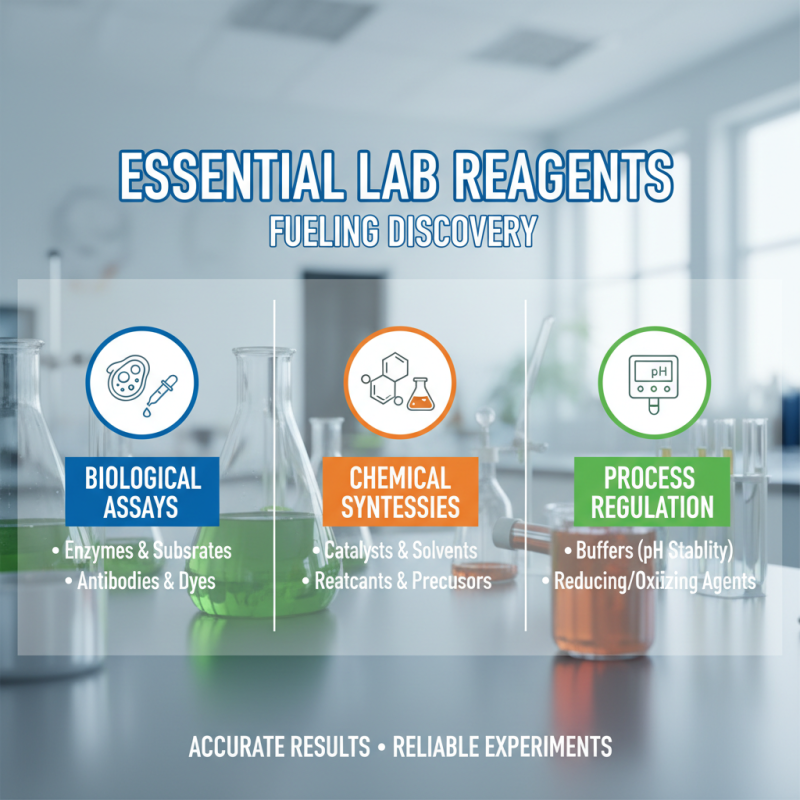
In any research laboratory, essential reagents play a pivotal role in facilitating experiments and ensuring accurate results. These chemicals are proactive players in various scientific processes, from biological assays to chemical syntheses. Understanding the specific functions of these reagents is crucial for researchers to select the right chemicals for their experiments. Their roles can range from catalysts that speed up reactions, to buffers that maintain pH levels, thus highlighting their importance in the success of laboratory work.
Tips: Always keep an organized inventory of your essential reagents. Regularly check expiration dates and replace any outdated materials to maintain the reliability of your experiments. When selecting reagents, consider compatibility with existing compounds in your protocols; this will minimize potential hazards and improve the efficacy of your research.
Moreover, proper handling and storage of these essential reagents are vital to ensure safety and effectiveness. Familiarizing oneself with the safety data sheets (SDS) for each chemical can provide insights into handling procedures and potential hazards. Additionally, implementing clear labeling and storage practices can prevent mix-ups and promote a safer working environment. By recognizing the essential role of reagents and adhering to safe practices, researchers can enhance their productivity and contribute to the advancement of scientific knowledge.
Common Laboratory Solvents: Types and Applications in Experimental Work
Laboratories depend heavily on a variety of solvents to facilitate experimental processes, making them an essential component of research. Among the common laboratory solvents, water stands out as the most universal solvent, often used in various experiments due to its ability to dissolve a wide range of substances. It serves as a medium for reactions, dilutions, and is critical in biological experiments where it aids in maintaining cellular environments.
In addition to water, organic solvents such as ethanol, methanol, and acetone play vital roles in a multitude of applications. Ethanol is frequently utilized in extraction processes and as a disinfectant, while methanol is commonly used in chromatography and as a reagent in organic synthesis. Acetone serves as an effective solvent for plastics and fibers, and is invaluable in cleaning applications, ensuring laboratory equipment remains contamination-free. Each of these solvents has distinct properties that make them suited for specific experimental needs, highlighting the importance of selecting the appropriate solvent based on the intended application.
Safety Protocols for Handling Hazardous Laboratory Chemicals
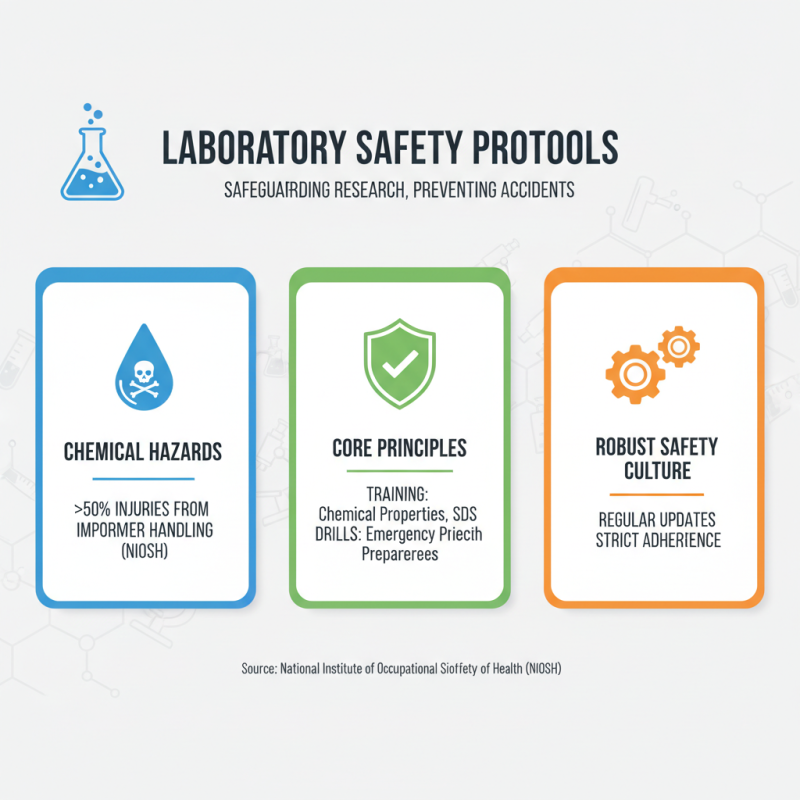
Laboratory safety protocols are essential to ensuring a safe working environment, especially when handling hazardous chemicals. According to the National Institute for Occupational Safety and Health (NIOSH), over 50% of laboratory-related injuries are due to improper handling of chemicals. This statistic underscores the necessity of comprehensive safety training and stringent adherence to established protocols. Researchers must be well-versed in chemical properties, including toxicity, reactivity, and proper storage methods. Regularly updating safety data sheets (SDS) and conducting safety drills are critical components of a robust safety culture within labs.
Tips: Ensure all laboratory personnel are trained on the specific hazards associated with each chemical used in the lab. Implement a buddy system for handling particularly dangerous substances, so that one person can assist another in case of an emergency. Additionally, maintaining an organized workspace with clearly labeled chemicals can significantly reduce the likelihood of accidents.
Always wear appropriate personal protective equipment (PPE) such as gloves, goggles, and lab coats when handling hazardous materials. The Centers for Disease Control and Prevention (CDC) recommends routine risk assessments to identify potential chemical hazards in the lab. Keeping emergency equipment, such as eyewash stations and safety showers, accessible and functional is equally important to mitigate risks when accidents occur. Adopting these protocols not only enhances safety but also fosters a more productive research environment.
Key Analytical Chemicals: Importance in Quality Control and Assurance
In any research laboratory, key analytical chemicals play a pivotal role in ensuring quality control and assurance. These chemicals are fundamental for validating the accuracy of experimental results and maintaining the integrity of the entire research process. According to a report published by the International Organization for Standardization (ISO), over 30% of laboratory errors stem from inadequate quality assurance measures. Thus, investing in high-quality analytical chemicals is not only a matter of compliance but also essential for achieving reliable outcomes.
One of the most significant aspects of analytical chemicals is their application in calibrating instruments and validating methods. These chemicals enable researchers to confirm that the instruments are functioning correctly and that their data is within an acceptable range, thereby minimizing variations that can lead to erroneous conclusions. A study conducted by the National Institute of Standards and Technology (NIST) found that laboratories using standardized chemicals experienced a 25% reduction in data variability, underscoring their importance in rigorous research.
Tip: Always consult recent industry standards and protocols to ensure the selected analytical chemicals meet current calibration and validation requirements. Another best practice is to regularly review supplier certifications and batch records to ensure consistency and reliability in your laboratory's results, ultimately enhancing your research's credibility.
Trends in Chemical Usage: Impact on Research Efficiency and Innovation
In the dynamic landscape of research laboratories, the trends in chemical usage play a pivotal role in enhancing research efficiency and fostering innovation. According to a recent report by the National Science Foundation, laboratories that adopt cutting-edge, high-purity chemicals experience a productivity increase of nearly 25%. This efficiency correlates directly with the quality of the research output, highlighting a clear connection between the choice of chemicals and the success of research projects. Furthermore, as laboratories prioritize sustainable practices, the shift towards eco-friendly chemicals has prompted a significant rise in their adoption. A study by the Journal of Cleaner Production indicates that labs implementing greener alternatives report a 15% improvement in operational efficiency.
Tip: When sourcing lab chemicals, consider suppliers that specialize in sustainability. Not only does this support environmentally friendly practices, but it may also lead to improved research outcomes through the use of higher-quality materials.
Moreover, the incorporation of smart technologies in chemical handling and analysis is setting new benchmarks in laboratory workflows. Innovations such as automated dispensing systems and real-time monitoring tools significantly reduce human error and optimize chemical usage. A benchmarking study from the Laboratory Automation Conference found that institutions employing these technologies experienced a 30% reduction in improper reagent handling, directly impacting the reliability of experimental results.
Tip: Invest in training staff on the latest laboratory technologies to ensure they are maximizing the potential benefits offered by modern chemical handling practices. Keeping teams informed will contribute to a culture of innovation within the laboratory.
Top Lab Chemicals Essential for Every Research Laboratory