Top 10 Essential Tips for Safe and Effective Chemical Disposal Strategies

Chemical disposal is a critical process that ensures the protection of human health and the environment. According to the Environmental Protection Agency (EPA), improper disposal of chemicals contributes to significant environmental degradation, contaminating soil and water sources, and posing serious health risks to communities. In fact, the National Research Council estimates that improper handling and disposal of hazardous waste account for over 30% of all reported environmental incidents. Therefore, establishing effective chemical disposal strategies is essential for industries that handle hazardous materials.

Top 10 Essential Tips for Safe and Effective Chemical Disposal Strategies

Moreover, the rise in global chemical production and usage underscores the urgency for efficient disposal methods. The American Chemical Society reports that the global production of chemicals reached approximately 8.5 billion metric tons in 2020, with significant increases expected in the coming years. As industries expand their chemical inventories, they face the dual challenge of adhering to stringent regulatory frameworks while also mitigating their environmental impact. Implementing safe disposal practices not only complies with federal and state regulations but also enhances corporate responsibility and public safety. With these considerations in mind, the following outline of essential tips for safe and effective chemical disposal is not only timely but necessary for sustainable practices in chemical management.

Guidelines for Identifying Hazardous Chemicals in Your Household

Identifying hazardous chemicals in your household is crucial for maintaining safety and ensuring proper disposal. Many common items may contain harmful substances, such as cleaning supplies, pesticides, and even batteries. Begin by checking labels for keywords like "toxic," "flammable," or "corrosive." Proper ventilation is key when handling these products; if spills occur, ensure you have the appropriate materials to contain and clean them safely.

One essential tip for safe disposal is to never pour chemicals down the drain or throw them in the regular trash. Instead, research local regulations regarding hazardous waste disposal in your area. Many communities offer designated drop-off sites or special collection events for hazardous materials, making it easier to get rid of these items safely. Also, consider substituting harmful chemicals with environmentally friendly alternatives in your household routine. These simple shifts not only protect your health but also contribute to a cleaner environment.
Understanding Local Regulations for Chemical Disposal

Understanding local regulations for chemical disposal is a crucial step in ensuring safety and environmental compliance. Each locality has specific guidelines that dictate how hazardous materials must be managed from the point of generation to their final disposal. For instance, according to the Environmental Protection Agency (EPA), improper disposal can lead to severe legal consequences, including fines that can reach up to $50,000 per day of violation for businesses. Therefore, it's imperative to be familiar with both federal and state regulations, as they can vary significantly.

Moreover, comprehensive training and knowledge of local waste management facilities contribute to effective chemical disposal strategies. The National Association of Clean Water Agencies (NACWA) reported that approximately 40% of waste water treatment facilities perform inadequate chemical disposal practices, which can lead to contamination of local water supplies. By adhering closely to local regulations and fostering partnerships with certified disposal service providers, organizations can ensure they are not only compliant but also contributing to public health and environmental protection. Engaging with local regulatory agencies and participating in community education initiatives can further enhance awareness and best practices surrounding chemical disposal.

Step-by-Step Procedures for Safe Disposal of Household Chemicals

Top 10 Essential Tips for Safe and Effective Chemical Disposal Strategies

When it comes to disposing of household chemicals safely, adhering to a structured methodology is crucial. The Environmental Protection Agency (EPA) emphasizes that improper disposal of chemicals can lead to severe environmental contamination and health hazards. Studies indicate that nearly 80% of toxic substances in landfills can originate from household products, underscoring the importance of responsible disposal practices.

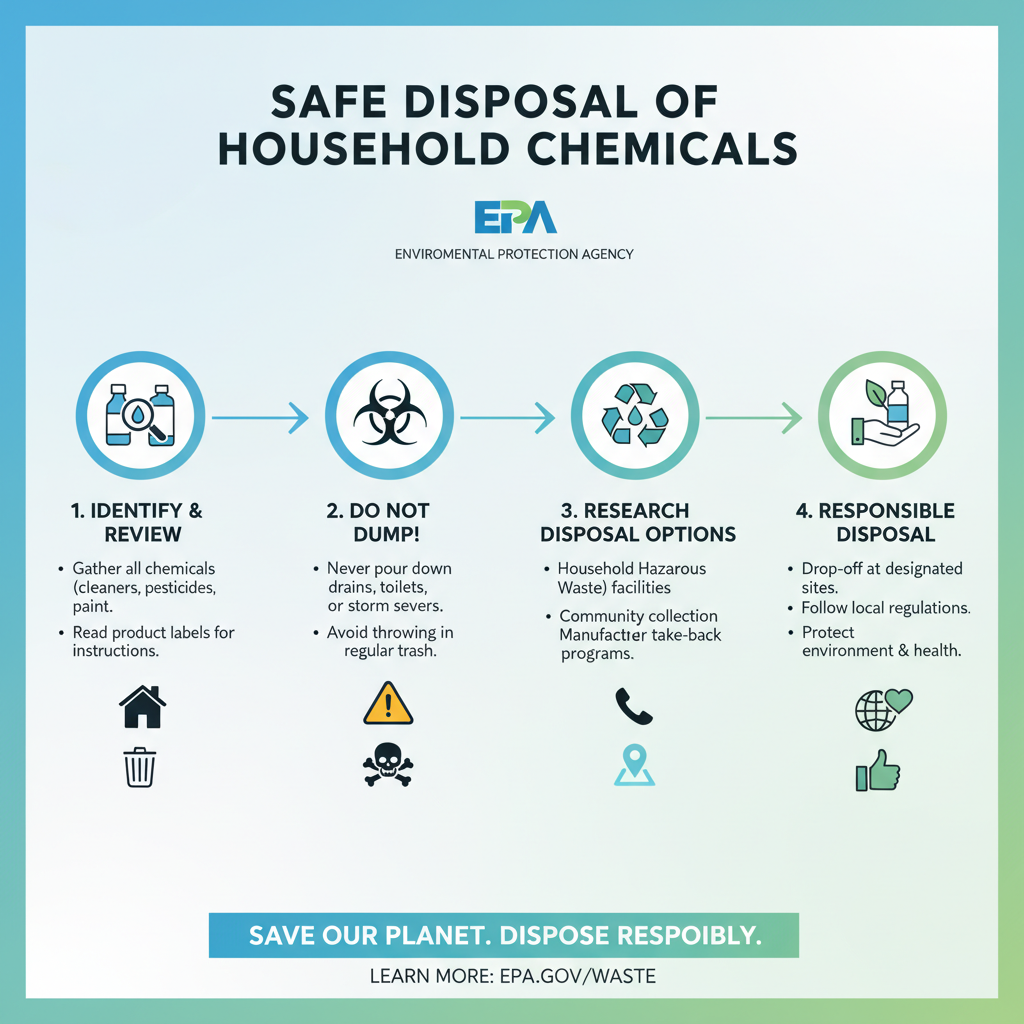
To begin, identify all household chemicals, including cleaners, pesticides, and paint, and review labels for specific disposal instructions.

Once identified, segregate these chemicals into categories: those that can be reused or recycled, and those that need special treatment. The EPA recommends utilizing local hazardous waste collection programs, which can often be found in community drop-off locations. For substances that are safe to dispose of in regular trash, ensure they are mixed with absorbent materials, such as kitty litter or coffee grounds, before sealing them in a sturdy container.

By following these step-by-step procedures, homeowners can significantly mitigate risks associated with chemical disposal while contributing to community safety and environmental protection.

Effective Recycling Options for Used Chemical Containers

The push for effective recycling options for used chemical containers has never been more critical, especially in light of recent regulatory changes aimed at curbing plastic waste. The European Union's new legislation prohibiting single-use plastic products underscores the urgency of adopting sustainable practices in disposal and recycling. As chemical containers can contribute to environmental pollution if not disposed of properly, it is essential for businesses and households alike to explore responsible recycling methods.

One effective strategy for handling used chemical containers is to always follow the manufacturer's disposal instructions, as these guidelines often specify how to recycle or dispose of their products safely. Additionally, consider partnering with local recycling programs that accept chemical containers. Some areas offer designated drop-off points for hazardous materials or specialized recycling centers capable of safely processing these items.

Moreover, reusing chemical containers can be an excellent alternative if safe and appropriate for non-chemical use. This not only minimizes the generation of waste but also helps in promoting a culture of sustainability. In today's world, where environmental regulations are tightening, implementing these tips for chemical disposal can lead to safer practices and a healthier planet.

Top 10 Essential Tips for Safe and Effective Chemical Disposal Strategies

Tip No. Tip Description Recycling Options
1 Know Local Regulations Understand the laws governing chemical disposal in your area. Check local hazardous waste facilities.
2 Identify Chemical Types Classify chemicals to determine their disposal methods. Specialized recycling facilities for specific chemicals.
3 Label Containers Properly Ensure all chemical containers are clearly labeled. Recycling programs that accept labeled containers.
4 Reduce Chemical Waste Minimize the amount of chemicals you use to cut down on waste. Participate in take-back programs.
5 Store Chemicals Safely Store chemicals in a dry, cool place to prevent reactions. Contact local recyclers for proper storage guidelines.
6 Use Appropriate Containers Select containers that are suitable for the chemicals being disposed of. Recycled plastic containers may be available.
7 Educate Staff Train staff on proper disposal methods and safety procedures. Workshops on chemical management.
8 Document Disposal Processes Keep records of disposal activities for accountability. Utilize digital tracking systems for better management.
9 Schedule Regular Disposal Events Organize frequent chemical disposal days. Partner with local recyclers for these events.
10 Seek Professional Help Consult with environmental experts for compliance and safety. Hire certified waste disposal services.

Best Practices for Preventing Chemical Waste Accumulation

Preventing chemical waste accumulation requires a proactive approach that emphasizes proper management and storage practices. One crucial strategy is to conduct regular inventory checks of chemicals on-site. By maintaining an accurate inventory, organizations can identify and eliminate excess or outdated materials before they become hazardous waste. This practice not only reduces waste but also minimizes potential safety risks associated with the improper handling of chemicals.

Additionally, implementing a well-structured labeling system can greatly enhance workplace safety and efficiency. Clear and comprehensive labels help employees easily identify the contents and appropriate handling procedures for each chemical. This practice reduces the chances of improper use and discourages unnecessary accumulation of chemicals that might not be needed. Furthermore, providing training for employees on safe handling and disposal methods fosters a culture of responsibility and awareness, ensuring that everyone understands the importance of minimizing chemical waste from the outset.

Scroll to Top