How to Properly Handle Chemical Disposal Safely and Effectively?
Chemical disposal is a crucial aspect of environmental protection. Proper handling and disposal of chemicals prevent contamination of soil and water sources. Dr. Emily Carter, a renowned expert in hazardous waste management, states, “Responsible chemical disposal is not just a necessity; it’s a moral obligation.”
Many companies struggle with how to manage chemical waste effectively. It's essential to recognize that mishandling chemicals can have dire consequences. Striking a balance between efficiency and safety is often challenging. Each chemical type demands specific methods, which requires awareness and training.
The complexities of chemical disposal can lead to mistakes. Sometimes, businesses overlook the risks involved. They may underestimate the impact of improper disposal. Therefore, continual learning and adaptation are vital in this field. Finding the right disposal methods can save not just the company money but also protect the planet. It's a shared responsibility that demands attention and action.

Understanding Chemical Types and Their Hazards
When dealing with chemical disposal, understanding the types of chemicals is crucial. Chemicals range from benign substances to highly toxic materials. Household cleaners often contain hazardous chemicals that can cause skin irritation. Industrial waste includes solvents and heavy metals, posing serious environmental risks. Each category requires different disposal methods due to their unique properties.
Awareness of chemical hazards is essential. For instance, flammable substances must be stored away from heat sources. Acidic materials can react violently with other chemicals. Knowing the risks helps prevent accidents. Inadequate disposal can lead to leaks, soil contamination, or harm to wildlife. Consider labeling containers clearly to avoid confusion. Understanding these details is key for effective and safe disposal practices. Each step matters.
How to Properly Handle Chemical Disposal Safely and Effectively? - Understanding Chemical Types and Their Hazards
| Chemical Type |
Common Hazards |
Disposal Method |
Regulations |
| Acids |
Corrosive, Reactivity |
Neutralization and Disposal in accordance with local hazardous waste regulations |
EPA, OSHA |
| Solvents |
Flammability, Health risks |
Collection for recycling or incineration by licensed waste handlers |
RCRA, SARA |
| Heavy Metals |
Toxicity, Bioaccumulation |
Specialized recycling processes or hazardous waste treatment facilities |
TSCA, EPA |
| Biological Waste |
Infectious, Hazardous materials |
Autoclaving and disposal in accordance with healthcare waste regulations |
CDC, EPA |
| Pesticides |
Toxic, Environmental hazard |
Disposal through licensed hazardous waste facilities |
FIFRA, EPA |
Identifying Proper Disposal Methods for Each Chemical
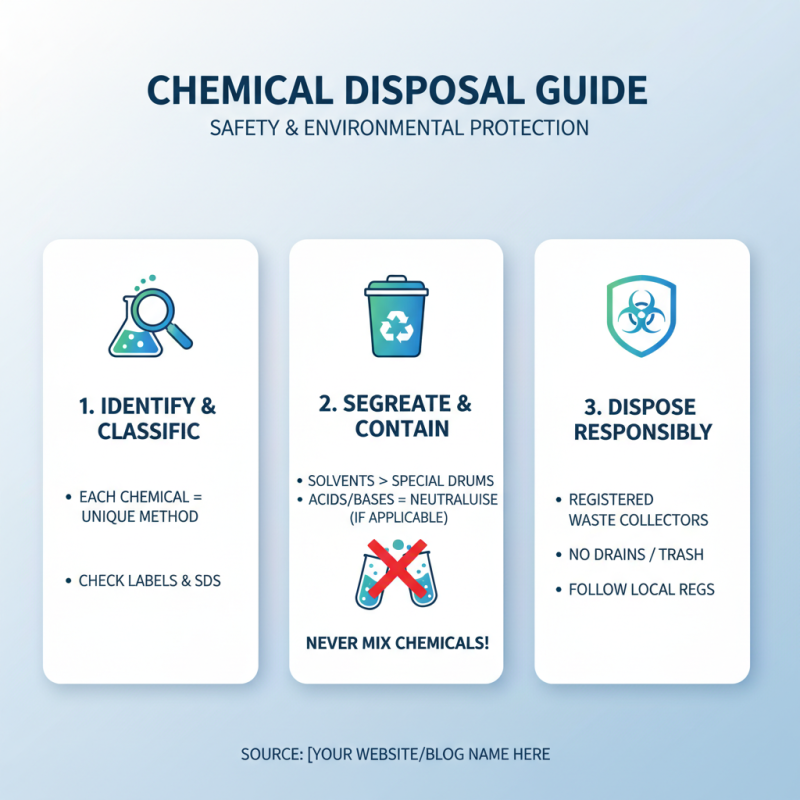
Proper disposal of chemicals is crucial for safety and environmental protection. Each chemical has its own disposal methods, and identifying these is the first step. For example, solvents often require special waste containers. Never mix different chemicals, as this can lead to dangerous reactions.
Tips: Always check local regulations. They provide guidelines for disposal. Reading the Material Safety Data Sheet (MSDS) can also help. It offers insights into safe handling and disposal.
Consider hazardous chemicals like batteries. These must be taken to designated collection sites. Many communities have special events for hazardous waste. Some chemicals, like acids, may require neutralization before disposal. Always wear protective gear when handling these substances. There is no room for error in chemical disposal. Taking shortcuts can lead to harm. Reflect on your practices regularly. Are you following the best protocols? Is your disposal method effective? Staying informed can make a big difference.
Establishing a Safe Disposal Plan for Your Facility
Establishing a safe disposal plan for your facility is essential. Everything begins with understanding your waste. Identify the types of chemicals used in operations. Each chemical requires a different handling approach. Ensure that safety data sheets are accessible. Staff should know the risks associated with each substance. This creates a culture of safety within the workplace.
Next, create a disposal procedure. Clearly outline steps for proper disposal. Use color-coded bins for different chemical waste. This visual cue helps in recognition and compliance.
Schedule regular training sessions for employees. They should feel comfortable with the procedures. Mistakes can happen, highlighting the need for updates in the plan. Regularly review disposal methods to adapt to new regulations or materials.
Finally, involve all staff in discussions about the disposal plan. Open communication encourages feedback. Employees often have valuable insights. It’s critical to address any concerns they may raise. Reflect on the effectiveness of the current strategy. Sometimes, it can feel overwhelming, but a proactive approach will enhance safety. Regular audits can help identify gaps and areas needing improvement.
Utilizing Local Regulations and Resources for Disposal
Handling chemical disposal responsibly is crucial for the environment and public safety.
Understanding local regulations is the first step. Each region has specific guidelines for hazardous waste.
These regulations can vary widely. It’s important to familiarize yourself with what
applies to your situation. Many municipalities offer resources for safe disposal. Check your local government’s
website for up-to-date information.
Community programs can aid in proper disposal techniques. Some areas host collection events for hazardous materials.
Participating in these events can reduce the risk in your home. Additionally, consider contacting local recycling
centers. They often accept certain chemicals and can provide specific instructions. However, these resources may
not cover all types of chemicals. Always verify what is accepted before you go.
It can be easy to overlook safety during disposal. Sometimes people may rush the process, leading
to mistakes. Taking your time is essential. Proper labeling and secure containers can prevent accidents. Reflect
on your past disposal methods. Were they truly safe? This self-assessment is vital for improving future practices.
Implementing Training and Safety Protocols for Staff
Proper training and clear safety protocols are essential for effective chemical disposal. According to a report by the Environmental Protection Agency, improper disposal leads to serious environmental hazards and worker injuries. Organizations must prioritize staff education to mitigate these risks. Regular training ensures employees understand the correct procedures for handling and disposing of hazardous materials.
To enhance safety, create engaging training programs. Use hands-on demonstrations and simulations. Workers tend to remember real-life scenarios better than lectures. Encourage participation and discussions around experiences of unsafe practices. Raise awareness about the consequences of negligence. This inclusive approach cultivates a culture of safety.
-
Tips: Ensure all employees attend refresher courses.
-
Keep training materials updated with the latest regulations.
-
Implement regular safety drills to maintain readiness.
Implementing checklists can be effective too. It helps staff adhere to protocols without missing critical steps. Consistency in following procedures is crucial. Regular audits can identify gaps in compliance. Reflect on these findings to enhance the overall disposal process. Taking these steps can vastly improve safety outcomes in any chemical handling environment.