What is the Role of Industrial Chemicals in Modern Manufacturing Processes
In the realm of modern manufacturing processes, industrial chemicals play a pivotal role in enhancing productivity, quality, and efficiency. As industries continue to evolve, the necessity for specialized chemicals has become increasingly apparent. Dr. Emily Hargrove, a renowned expert in industrial chemistry, emphasizes this significance by stating, "Industrial chemicals are the backbone of manufacturing, enabling processes that would otherwise be impossible." This underscores the integral part these substances play in everything from production to packaging.
As we delve deeper into the topic, it becomes clear that industrial chemicals not only facilitate essential reactions and processes but also contribute to innovation. They are used in the formulation of materials that go into countless products, ranging from everyday household items to complex machinery. By optimizing manufacturing processes, industrial chemicals help in reducing waste and promoting sustainability, which is paramount in today’s ecologically conscious market.
In the following sections, we will explore the various applications of industrial chemicals within modern manufacturing and highlight their transformative impact on the industry. From enhancing product performance to driving technological advancements, the role of these chemicals cannot be overstated.
The Definition and Classification of Industrial Chemicals in Manufacturing
Industrial chemicals play a crucial role in modern manufacturing processes, serving as the essential building blocks for a wide variety of products. These chemicals can be classified into several categories, including basic chemicals, specialty chemicals, and consumer chemicals. According to the American Chemistry Council, the U.S. chemical industry alone produced more than 229 billion dollars in shipments of industrial chemicals in 2021, reflecting the immense scale of this sector. Basic chemicals, which include compounds like acids, bases, and salts, are foundational in producing plastics, fertilizers, and resins, underpinning numerous manufacturing processes.
Specialty chemicals, on the other hand, are tailored for specific applications and are often characterized by their unique properties. Research by MarketsandMarkets indicates that the specialty chemicals market is projected to reach approximately 1 trillion dollars by 2025, driven by demand in sectors such as automotive, construction, and electronics. These chemicals not only enhance performance but also contribute to sustainability in manufacturing by enabling processes that reduce waste and energy consumption. Understanding the classification and role of industrial chemicals is essential for manufacturers to optimize production efficiencies and meet evolving regulatory standards.
Role of Industrial Chemicals in Modern Manufacturing Processes
The Role of Industrial Chemicals in Product Development and Innovation
Industrial chemicals play a vital role in the landscape of product development and innovation across various manufacturing sectors. They serve as critical components in the formulation of materials that drive technological advancements, enhancing properties such as strength, durability, and efficiency. For instance, the use of specialty chemicals in plastics and composites can lead to the creation of lighter and stronger materials that are essential for industries like automotive and aerospace. Such innovations not only improve product performance but also contribute to sustainability by reducing material waste and energy consumption.
In addition to improving material characteristics, industrial chemicals enable the development of novel processes that can significantly shorten production times and reduce costs. The incorporation of advanced chemicals into manufacturing workflows can streamline operations, leading to enhanced productivity and the ability to adapt quickly to changing market demands. Moreover, the scientific research surrounding these chemicals fosters a continuous cycle of innovation, where new discoveries can lead to breakthroughs in product design, thus satisfying consumer demands for more efficient and environmentally friendly solutions.
Through these mechanisms, industrial chemicals are not just functional inputs; they are the backbone of modern manufacturing's drive toward innovation and excellence.
Impact of Industrial Chemicals on Efficiency and Cost-Effectiveness
Industrial chemicals are pivotal in modern manufacturing processes, significantly impacting efficiency and cost-effectiveness. The use of these chemicals allows manufacturers to enhance product quality, streamline operations, and minimize waste. For instance, the incorporation of specialty chemicals can lead to improved formulation properties, which enable faster production cycles and greater consistency in output. By optimizing raw materials, manufacturers can reduce costs per unit, making them more competitive in the market.
Tips: To further enhance efficiency, consider conducting regular assessments of chemical usage and waste management practices. Implementing lean manufacturing principles can also help identify areas where chemical processes can be refined, ultimately leading to lower operational costs.
Additionally, the careful selection of industrial chemicals can also contribute to sustainability goals. By investing in more environmentally-friendly alternatives, companies not only comply with regulations but can also appeal to a growing market that prioritizes eco-conscious products. This not only fosters a positive brand image but also leads to potential long-term savings as energy and resource usage becomes more efficient.
Tips: Always stay updated on industry innovations to discover new chemicals that improve both efficiency and environmental impact, ensuring that your manufacturing processes remain competitive and sustainable.
Navigating Safety Regulations and Environmental Concerns in Chemical Use
In modern manufacturing processes, the use of industrial chemicals plays a vital role in enhancing efficiency and product quality. However, with this reliance comes a significant responsibility to navigate safety regulations and address environmental concerns. According to the American Chemistry Council, the chemical manufacturing sector contributed approximately $760 billion to the U.S. economy in 2021, underlining its importance. Nevertheless, manufacturers must also comply with stringent regulations imposed by entities such as the Occupational Safety and Health Administration (OSHA) and the Environmental Protection Agency (EPA). These regulations ensure that chemical use does not compromise worker safety or environmental integrity.
The increasing focus on sustainability necessitates the exploration of safer chemical alternatives and practices. A report from the Global Chemical Industry Market Analysis projected that the green chemistry market will reach $100 billion by 2026, reflecting a significant shift towards environmentally friendly practices. This transition not only addresses the growing consumer demand for sustainable products but also helps manufacturers mitigate risks associated with chemical exposure. Implementing best practices and adhering to regulations can ultimately lead to safer workplaces and a reduced environmental footprint, paving the way for a more responsible and sustainable manufacturing industry.
Future Trends in Industrial Chemicals and Their Applications in Manufacturing
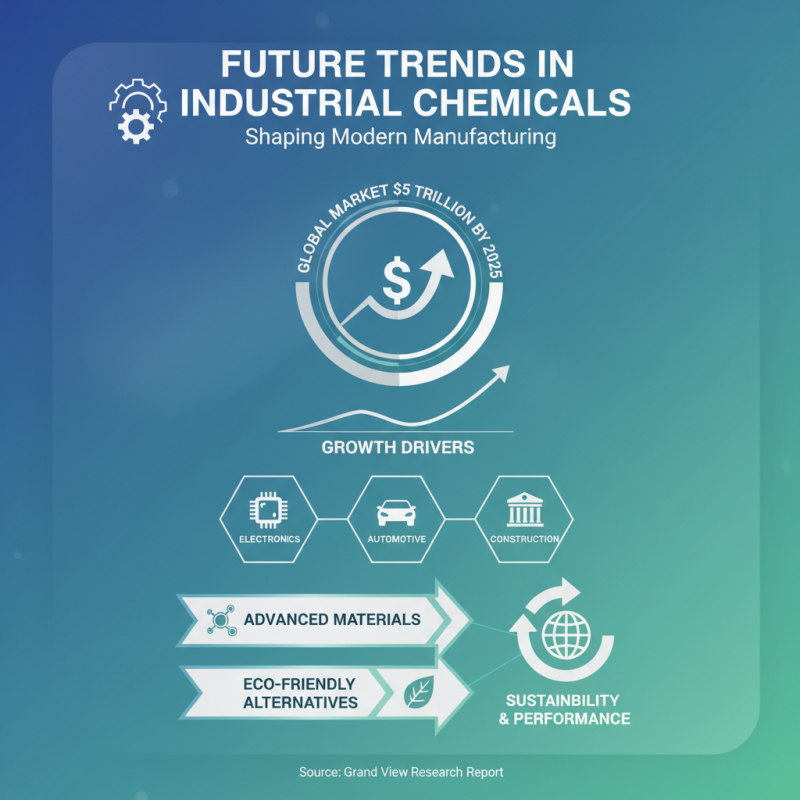
The future trends in industrial chemicals are shaping the landscape of modern manufacturing processes. According to a recent report by Grand View Research, the global industrial chemicals market is expected to reach approximately $5 trillion by 2025, driven by increasing demand across various sectors, including electronics, automotive, and construction. This surge is largely attributed to the rising adoption of advanced materials and eco-friendly alternatives, which emphasize sustainability without compromising performance.
One notable trend is the growing focus on green chemistry, which aims to reduce the environmental impact of chemical production and usage. The American Chemical Society reports that chemicals produced using sustainable practices could reduce greenhouse gas emissions by up to 70%. Additionally, innovations in biochemicals are gaining traction, with the market for biodegradable plastics projected to grow significantly, which will facilitate more sustainable manufacturing practices. By integrating these innovative materials and methods, industries can not only improve their sustainability but also enhance efficiency and reduce costs in their production processes.