What are Specialty Chemicals and Their Global Impact?
Specialty chemicals play a vital role in today's global economy. They are unique substances designed for specific applications. These chemicals differ significantly from commodity chemicals in their tailored properties and specialized uses. Industries such as agriculture, pharmaceuticals, and electronics rely heavily on specialty chemicals. Their targeted functions drive innovation and efficiency.
The global impact of specialty chemicals is profound. They drive advancements in various sectors, improving product performance and sustainability. For instance, the use of specialty chemicals in agriculture enhances crop yields and reduces environmental footprints. As consumers demand more advanced products, manufacturers are turning to these unique chemicals to meet new performance standards.
However, the production and use of specialty chemicals also present challenges. Concerns about safety and environmental impact are growing. Companies must navigate these complexities while advancing their technologies. This balancing act between innovation and responsibility reflects the ongoing evolution in the specialty chemicals sector. The industry's future will depend on how well it addresses these challenges while continuing to contribute to global progress.

Definition and Classification of Specialty Chemicals in the Industry
Specialty chemicals play a vital role in various industries, providing unique properties and functions. They are typically defined as chemical products that deliver specific effects rather than bulk chemicals. These substances are essential for manufacturing numerous products, from paints to pharmaceuticals, and their impact can be seen globally.
In the industry, specialty chemicals can be classified into several categories, including agrochemicals, surfactants, and polymers. Each category serves distinct purposes. For example, agrochemicals support agricultural productivity, while surfactants enhance cleaning products. This classification highlights the versatility and significance of specialty chemicals.
Tips: When exploring specialty chemicals, consider their practical applications in daily life. Observe how these chemicals improve product performance. Understanding their classification can help identify the right chemical for specific needs.
While specialty chemicals drive advancements, their production poses challenges. Environmental concerns and regulatory restrictions are key issues. It's crucial for companies to address these factors while maintaining product quality and effectiveness. Reflect on the balance between innovation and sustainability to ensure long-term benefits.
What are Specialty Chemicals and Their Global Impact?
| Category |
Description |
Global Market Size (USD Billion) |
Growth Rate (%) |
Key Applications |
| Agrochemicals |
Chemicals used in Agriculture such as fertilizers and pesticides. |
58.0 |
5.5 |
Crop protection, Yield enhancement |
| Personal Care Chemicals |
Ingredients used in cosmetics and personal hygiene products. |
15.0 |
4.8 |
Skin care, Hair care, Makeup |
| Performance Chemicals |
Chemicals that enhance the performance of products in various industries. |
24.5 |
6.0 |
Textiles, Coatings, Construction |
| Specialty Polymers |
Unique polymers with specific properties tailored for specialized applications. |
20.0 |
5.0 |
Adhesives, Sealants, Elastomers |
| Electronic Chemicals |
Chemicals used in the production of electronic components. |
13.5 |
6.3 |
Semiconductors, Circuit boards |
Key Applications of Specialty Chemicals in Various Sectors
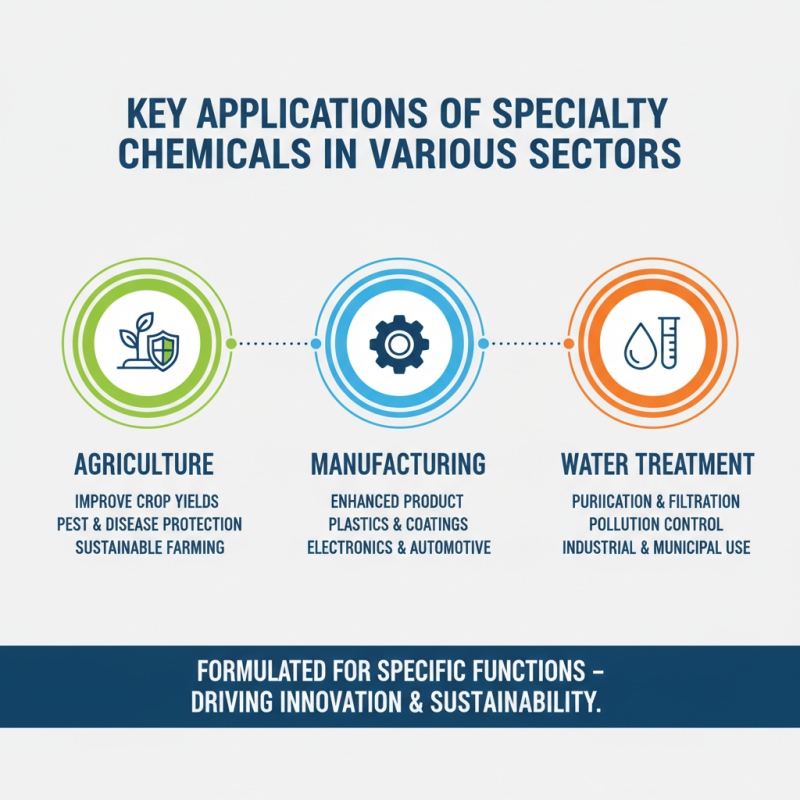
Specialty chemicals play a crucial role across various industries. These chemicals are formulated to serve specific functions, enhancing product performance. A common application is in agriculture, where specialty chemicals improve crop yields. They protect plants from pests and diseases, promoting sustainable farming practices. Their targeted use contributes to food security.
In the automotive sector, specialty chemicals are vital for producing high-performance materials. They improve vehicle durability and fuel efficiency. For example, specialty coatings provide superior protection against corrosion. This can lead to longer vehicle life and reduced environmental impact. However, achieving the right balance between performance and safety raises ongoing questions.
The pharmaceutical industry also relies heavily on specialty chemicals. They are essential in drug formulation and delivery systems. These chemicals ensure that medications are effective while minimizing side effects. Yet, the complexity of developing new compounds often leads to failures. Continuous research and innovation are necessary to address these challenges. Overall, specialty chemicals are indispensable, but their production and application must be carefully managed.
Market Trends and Growth Projections for Specialty Chemicals Worldwide
The specialty chemicals market is witnessing significant growth worldwide, driven by key advancements across various sectors. According to market reports, the global specialty chemicals industry is anticipated to reach approximately $1 trillion by 2025, growing at a CAGR of 4-6%. This growth is fueled by increasing demand in end-user industries such as automotive, pharmaceuticals, and personal care.
One notable trend is the shift towards sustainable products. Companies are exploring bio-based and eco-friendly alternatives, aiming to reduce environmental impact. Data suggests that nearly 30% of consumers consider sustainability during their purchasing decisions. This has led many manufacturers to innovate and adapt their offerings.
Tips for businesses: Focus on transparency in sourcing materials. Highlight sustainability efforts to appeal to eco-conscious consumers. Build a flexible supply chain to respond quickly to market changes. As the market evolves, companies must remain agile and ready to embrace new technologies and processes. Adapting to the changes in consumer preferences will be crucial for long-term success in the specialty chemicals sector.
Global Specialty Chemicals Market Trends (2023)
This bar chart represents the current market size of various applications of specialty chemicals across the globe in 2023. The agriculture and pharmaceuticals sectors show substantial market sizes, indicating their significant demand and impact on the global economy.
Environmental Impact and Sustainability Challenges of Specialty Chemicals
The environmental impact of specialty chemicals is significant.
These substances play a key role in various industries, from agriculture to manufacturing. However, their production and use often raise sustainability concerns. Toxic byproducts and high energy use are common issues. The carbon footprint of specialty chemicals can be large, contributing to global warming.
Water pollution is another crucial challenge. Many specialty chemicals can contaminate water sources. This issue affects not just aquatic life but also communities relying on clean water. Additionally, the improper disposal of chemical products can lead to long-lasting environmental damage. Regulatory frameworks are in place, yet enforcement remains inconsistent across regions.
Sustainability in the specialty chemicals sector requires a shift in practices. Companies need to embrace greener technologies and focus on biodegradable options. Investing in research and development is essential. It would allow for safer alternatives to harmful chemicals. These changes are not just necessary; they are urgent. As industries evolve, the push for environmental responsibility must intensify.
Innovations and Technological Advancements in Specialty Chemical Production
The specialty chemicals sector is undergoing significant innovations. Advances in production methods are driving efficiency and sustainability. The market size for specialty chemicals is projected to reach approximately $1 trillion by 2027, according to a recent report by Transparency Market Research. This growth indicates a robust demand for tailored chemical solutions across various industries.
Emerging technologies, such as green chemistry, are reshaping the manufacturing process. For example, biocatalysis is gaining traction, reducing energy consumption and waste output. A study from the American Chemical Society highlights that these methods can cut traditional production costs by up to 30%. However, the adoption of these technologies poses challenges.
Many companies face a steep learning curve when integrating new systems. Training staff and recalibrating processes requires time and investment. Smaller firms may struggle with this transition, risking stagnation in a rapidly evolving market. Balancing innovation with practical execution remains a pressing concern. Sustainable practices must also align with economic viability to ensure long-term industry growth.