2026 Top Trends in Chemical Recycling for Sustainable Future?

As we look towards a more sustainable future, chemical recycling emerges as a key player in waste management. This innovative approach breaks down plastics into their original components, allowing materials to be reused effectively. Unlike traditional recycling, chemical recycling can handle complex plastics that often end up in landfills.

The 2026 trends in chemical recycling reveal vast potential. New technologies are being developed. Some processes promise higher efficiency and lower environmental impact. However, challenges remain. Not all chemical recycling methods are widely accepted or economically viable today. This calls for a critical examination of systems and practices.

It's essential to reflect on the current state of chemical recycling. While progress has been made, the industry must address scalability and accessibility. A commitment to innovation and collaboration can further enhance these efforts. As we push forward, awareness and investment will be crucial in transforming chemical recycling into a mainstream solution for a sustainable planet.

2026 Top Trends in Chemical Recycling for Sustainable Future?

Current State of Chemical Recycling Technologies in 2026

The landscape of chemical recycling in 2026 reveals promising advancements yet faces significant challenges. Recent reports indicate that global capacity for chemical recycling could reach 5 million tons by 2026, a substantial increase from previous years. However, only about 15% of facilities currently operate efficiently. Many plants struggle with technology scalability and economic viability.

A focus on feedstock quality is essential. Pre-treatment processes often diminish the efficiency of recycling, raising costs. Data suggests that only 38% of recycled materials meet the required purity standards for new products. This indicates room for improvement in optimizing processes to ensure higher quality outputs.

Emerging technologies, such as advanced catalytic systems, show potential. They can convert mixed plastics into valuable raw materials effectively. Yet, many methods are still in the pilot stages. The industry must reflect on scaling these innovations and addressing regulatory hurdles. Balancing innovation with feasibility will be crucial for a sustainable future in chemical recycling.
Key Innovations Driving Chemical Recycling Advances

The chemical recycling landscape is rapidly evolving. Innovations are emerging to address the growing plastic waste crisis. Advances in depolymerization technologies are particularly noteworthy. This process breaks down plastics into their fundamental building blocks. It allows for the recycling of previously non-recyclable materials. These new methods show promise in creating a more sustainable future.

Another significant development is the integration of artificial intelligence. AI can enhance efficiency in sorting and processing recycled materials. It helps identify and classify different types of plastics effectively. However, this technology is not without its challenges. Implementing AI in various recycling facilities may require significant investment. Additionally, not all areas have access to such advanced systems.

Furthermore, researchers are exploring bio-based catalysts. These catalysts can improve the breakdown process of plastics. They offer an eco-friendlier option compared to traditional methods. However, current research is still in its early stages. There are questions regarding scalability and effectiveness. It's clear that the journey toward sustainable chemical recycling is complex yet essential. More reflection and innovation are necessary to unlock its full potential.

2026 Top Trends in Chemical Recycling for a Sustainable Future

This chart illustrates the projected advancements in chemical recycling technologies, highlighting key innovations and their anticipated impact on sustainability by 2026.

Impact of Chemical Recycling on Waste Management and Sustainability

2026 Top Trends in Chemical Recycling for Sustainable Future?

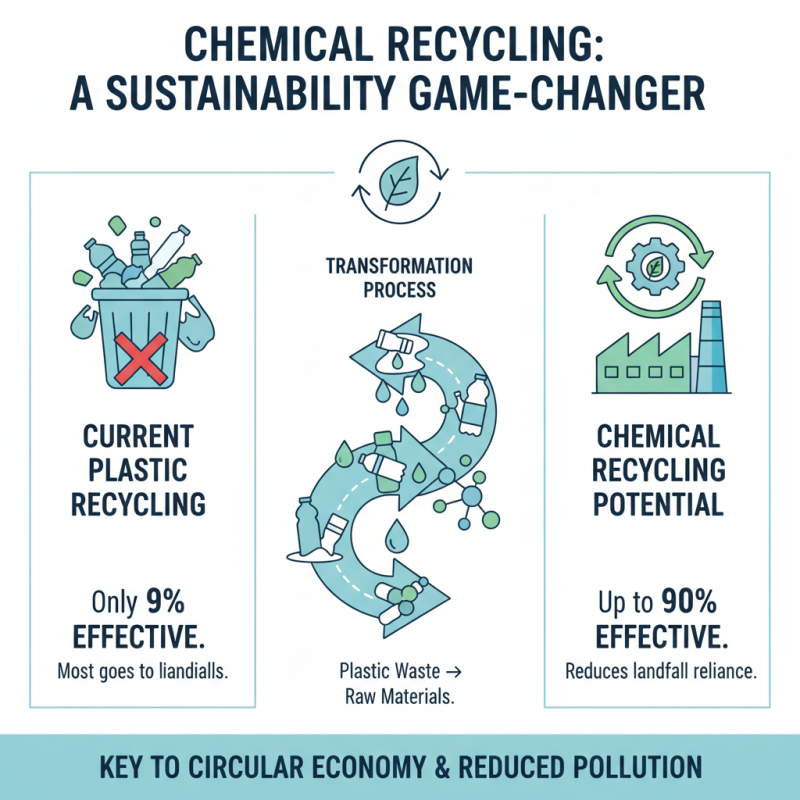
Chemical recycling is becoming a vital aspect of waste management. It takes plastic waste and turns it back into raw materials. This process helps reduce reliance on landfills. Current estimates suggest that only 9% of plastic is recycled effectively. In contrast, chemical recycling can potentially recycle up to 90%. This significant difference highlights its importance in promoting sustainability.

Reports indicate that chemical recycling can decrease the carbon footprint of plastics. When comparing traditional recycling to chemical methods, the emissions can be reduced by up to 50%. This offers an environmentally friendly alternative. However, challenges remain. High energy consumption and costs are barriers to widespread adoption. Some critics argue that it may distract from reducing plastic production overall.

Investments in technology are essential to overcome these hurdles. Governments and industries need to collaborate for better solutions. Innovations in chemical recycling are promising. Yet, we must reflect on our collective efforts. Without a shift in consumer habits, efforts may fall short. Sustainable future demands more than just technological advancements. It requires a fundamental change in our relationship with materials.

Challenges and Regulations Facing Chemical Recycling Initiatives

Chemical recycling is gaining traction, but it faces significant challenges. Regulations often lag behind technology. This mismatch creates confusion and slows down progress. For many initiatives, local and national policies are complex. Companies struggle to navigate these intricate guidelines.

Another issue is the public perception of chemical recycling. Many people are unaware of how it works. Some view it with skepticism. The industry must engage and educate the public effectively. Misunderstandings can lead to resistance against new technologies. Trust is essential for moving forward.

Investments in research and development are crucial yet spotty. While some progress has been made, scaling operations remains difficult. Funding can be inconsistent, creating uncertainty. Industry players must come together to advocate for supportive regulations. Collaboration may help overcome barriers and promote sustainable solutions.

2026 Top Trends in Chemical Recycling for Sustainable Future

Trend Description Challenges Regulations
Increased Adoption of Advanced Chemical Recycling Technologies Utilization of new technologies to convert plastic waste into valuable chemicals and fuels. High capital investment and need for technological expertise. Regulatory frameworks lagging behind technology advancements.
Collaboration Across the Supply Chain Partnerships between producers, recyclers, and brands to enhance recycling processes. Alignment of objectives and data sharing can be complex. Emerging standards for recycled content across industries.
Focus on Circular Economy Models Transitioning from a linear to a circular economy through recycling. Consumer behavior and demand for recycled products can be inconsistent. Regulatory incentives for companies adopting circular practices.
Investment in R&D for Chemical Recycling Funding research to improve recycling efficiencies and processes. Finding sustainable funding sources can be difficult. Supportive policies from governments for innovation in recycling.
Public Awareness and Education Programs aimed at informing consumers about recycling and sustainable practices. Misunderstanding of recycling processes by the public. Regulations mandating education on waste management.

Future Outlook: Trends Shaping the Chemical Recycling Landscape

2026 Top Trends in Chemical Recycling for Sustainable Future?

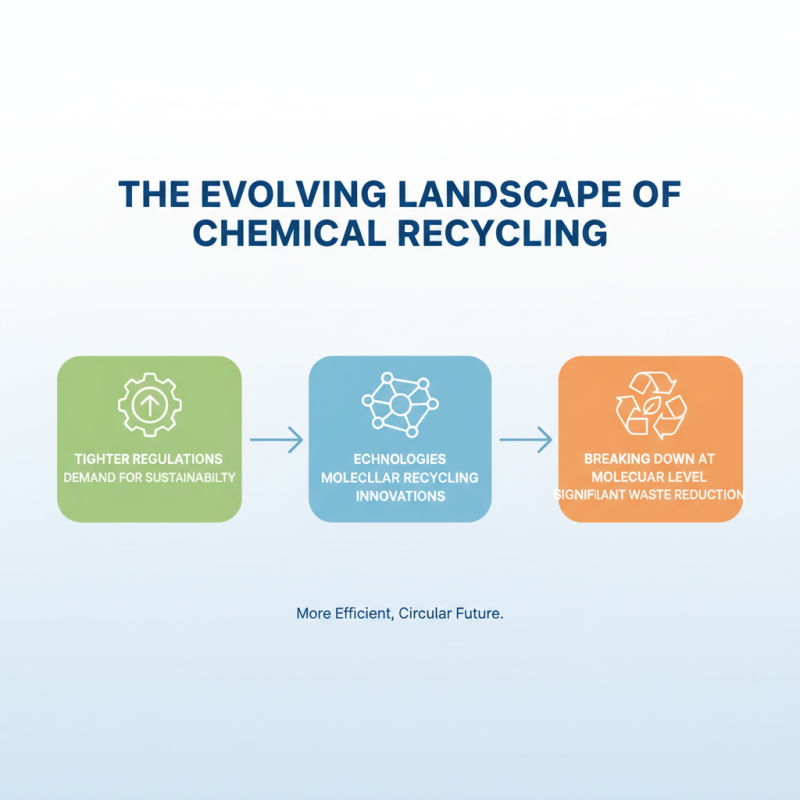
The landscape of chemical recycling is evolving rapidly. As regulations tighten, the demand for sustainable solutions grows. Emerging technologies are driving this shift. Innovations in molecular recycling are gaining attention. These methods break down materials at the molecular level, making recycling more efficient. They promise to reduce waste significantly.

Collaboration among industries is crucial. Knowledge sharing can accelerate advancements. However, challenges remain. For instance, scalability is a major hurdle. Many processes are still in early development stages. This leads to concerns about feasibility in real-world applications.

Public awareness is also increasing. Consumers want to know where their materials go. They demand transparency in recycling processes. Yet, misconceptions about chemical recycling persist. Education is key in overcoming these barriers. Addressing these gaps can strengthen community engagement in sustainable practices. The path forward is promising, but it requires collective effort and ongoing reflection.

Scroll to Top