
How to Choose the Right Chemical Cleaning Products?

Choosing the right chemical cleaning product starts with identifying the soil, the surface, and the cleaning conditions. Grease on stainless steel may need a different formula from mineral deposits on tile. A strong product is not automatically the best choice. It may damage a coating, leave residue, or create extra work if it does not match the task.

Read the product label and safety data sheet before use. Check the recommended dilution, contact time, protective equipment, and ventilation guidance. A few drops measured carefully can perform differently from an unmeasured pour. Small details matter. Confirm that the cleaner is suitable for the material, especially around painted finishes, rubber seals, and sensitive equipment. When compatibility is uncertain, test a small, inconspicuous area first and inspect it after the surface dries.

Effective chemical cleaning depends on choosing a product that removes the target soil while fitting the setting and the available procedures. Consider whether the work happens in a food-preparation area, a workshop, or a routine maintenance space; each may have different cleaning needs. Keep containers clearly identified, follow storage instructions, and never mix products unless the manufacturer explicitly directs it. That point can feel obvious, yet rushed work makes mistakes more likely. Product claims also deserve a careful look: compare them with the label directions and the actual surface conditions. The right choice is rarely about strength alone. It is about consistent results, safer handling, and fewer surprises.
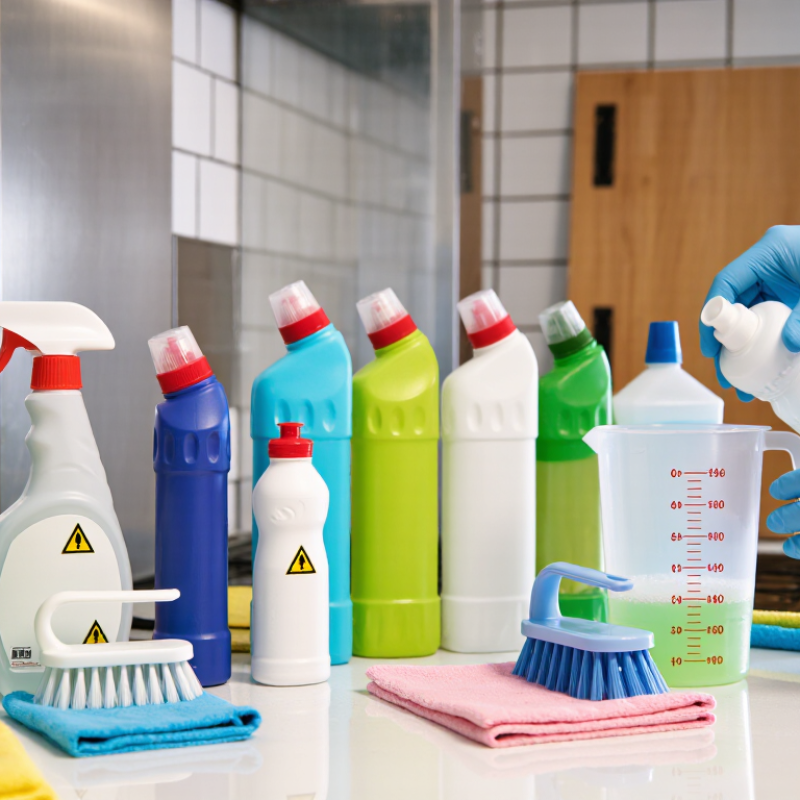
How to Choose the Right Chemical Cleaning Products?

Define the Cleaning Task and Desired Result

Before choosing a chemical cleaner, describe the job in observable terms. Identify the soil, the surface, and the result you need. A greasy film on a stainless-steel worktop calls for a different approach than mineral scale on a tile wall. Mixed soils may need separate cleaning steps. Be specific. “Make it shine” is less useful than “remove the oily residue without dulling the finish.” Also note the area’s size, ventilation, and whether food, equipment, or people will contact the surface afterward.

Define what clean means before you start. Is the goal to remove visible dirt, reduce residue, or prepare the surface for another process? These are not identical outcomes. Check the surface manufacturer’s care guidance and read the product label and safety information for compatibility, dilution, contact time, and rinsing instructions. Never assume a stronger solution will work better. Test a small, inconspicuous area first, then inspect it after drying; changes can be subtle at first. Use suitable protective equipment and provide ventilation as directed. This planning can feel slow, but skipping it often creates rework. I would also question any plan that lacks a clear way to verify the result. A clean appearance alone may not tell the whole story.

How to Choose the Right Chemical Cleaning Products?

Define the Cleaning Task and Desired Result

First identify the soil: acidic cleaners are commonly used for mineral scale, neutral cleaners for routine cleaning, and alkaline cleaners for oily or greasy soils. These pH values are illustrative examples; actual products vary. Check the product label and surface compatibility, and never mix cleaning products.

Identify the Surface and Material Compatibility

Identify the surface before choosing a cleaner. Stainless steel, anodized aluminum, painted walls, acrylic, and natural stone react differently. A product that lifts grease from steel may dull a coating or etch marble. Check the cleaner’s label and safety data sheet for its pH, dilution, contact time, and material restrictions. pH matters: a two-unit change represents about a 100-fold change in hydrogen-ion activity. That difference can affect sensitive finishes. Test first.

Professional compatibility data can guide your choice. ASTM D543 evaluates plastics exposed to chemical reagents, recording changes such as appearance, dimensions, weight, and strength. ASTM D1308 examines how household chemicals affect clear and pigmented finishes. These methods show why a quick wipe test is not enough for valuable or delicate surfaces. Results depend on exposure time, concentration, temperature, and the exact material. A label alone is not enough.

Tips: Apply a small amount to a hidden spot, such as behind a sink or under a counter edge. Follow the stated dwell time, rinse as directed, then check for whitening, tackiness, swelling, or color transfer after drying. If the surface is unknown, pause and ask the supplier or facility-care specialist. I would not assume “pH-neutral” means risk-free; dyes, solvents, and repeated use can still change a finish.

Assess Ingredients, Hazards, and Safety Requirements

Choosing a chemical cleaner starts with the soil and surface, not a bold claim on the front label. Read the ingredient list and product label together. Look for active cleaning agents, fragrance, solvents, and stated concentration. A degreaser may loosen oily residue but dull a coated countertop. Test it on a hidden spot. Check the safety data sheet (SDS) for hazard statements, first-aid steps, storage guidance, and exposure controls. If an ingredient is unfamiliar, do not guess from the packaging; ask the supplier or a qualified safety contact. Details matter.

Match precautions to the task. Wear the protective equipment specified on the label or SDS, such as chemical-resistant gloves and eye protection. Provide ventilation when required. Keep the product in its original, clearly labeled container, and measure dilution exactly. “A little extra” can increase exposure or damage a surface without improving results. Never mix cleaning products, especially bleach with acids or ammonia-based cleaners. Confirm compatibility with the material and nearby finishes, and follow disposal instructions. In a small room, fumes can build up faster than expected. A mild smell does not prove low risk; that assumption is easy to make, and unreliable. If directions are unclear, pause and verify them before use.

Compare Product Types, Concentrations, and Cleaning Performance

Choosing a chemical cleaner means matching its chemistry to the soil, surface, and task—not chasing the highest concentration. Neutral detergents suit routine dust and light grease; alkaline products tackle heavier oily soils, while acidic cleaners help dissolve mineral scale. Disinfectants serve a different purpose: they work against specified microbes only when used at the labeled dilution and contact time. Keep the surface wet for the full time.

Easy to overlook.

Concentration matters, but it is not a performance score by itself. The CDC’s Guideline for Disinfection and Sterilization in Healthcare Facilities (2008) reports that ethanol is most effective as a bactericide at 60%–90%; that finding is not a recipe for every surface or cleaning task. Compare ready-to-use products and concentrates by cost per prepared litre, dilution accuracy, rinsing needs, and label contact time. EPA registration labels specify approved uses and directions, so a product that dries early may not meet its stated contact time. EPA’s Safer Choice program also screens ingredients for health and environmental criteria, a useful selection factor rather than proof of cleaning performance. Test a small area and record soil removal, residue, and surface changes.

A tidy specification sheet can still mislead.

Check Application Instructions, Ventilation, and Storage Needs

Choosing a chemical cleaner is only part of the job; using it as directed matters just as much. Read the full application instructions before opening the container. Check the required dilution, contact time, rinse procedure, and approved surfaces. A cleaner that sits too long may damage a finish, even when the stain remains. Test an inconspicuous area when the instructions allow it. Small details matter.

Ventilation should match the product and the task. Open doors or windows if the label recommends it, and use suitable exhaust equipment where needed. Do not assume that a mild smell means low exposure. Wear the protective equipment specified on the label or safety data sheet, and keep other people away from the work area. Never mix cleaning products. It sounds obvious, but rushed jobs invite mistakes.

Plan storage before you buy a large container. Keep products in their original, clearly labeled packaging, with lids closed and labels readable. Follow the stated temperature and storage conditions, and keep incompatible materials apart as directed by the safety data sheet. Store chemicals securely, away from food and children. A shelf that looks organized can still be unsuitable if it gets warm or damp. I would check that spot twice; memory alone is not a reliable system.

How to Choose the Right Chemical Cleaning Products? — Check Application Instructions, Ventilation, and Storage Needs

Product Type Typical Applications Application Instructions to Check Ventilation and Personal Protection Storage Considerations Important Compatibility Checks
Neutral detergent Routine cleaning of washable floors, sealed surfaces, and general-purpose areas. Check whether the product is ready to use or requires dilution. Follow label directions for application, rinsing, and surface drying. Provide ordinary room ventilation. Wear gloves if directed by the label or if prolonged contact is expected. Keep in the original, closed container in a cool, dry place, away from food and incompatible materials. Test on an inconspicuous area first, especially on delicate finishes. Avoid using on surfaces the label excludes.
Alkaline degreaser Removal of oils and grease from suitable kitchen equipment, floors, and hard surfaces. Check the specified dilution, surface contact time, temperature limits, and whether rinsing is required. Do not allow the solution to dry unless instructed. Use good ventilation. Wear the gloves and eye protection specified on the label or Safety Data Sheet (SDS); stronger formulations may require additional controls. Store upright with the cap secured. Keep separate from acids and other incompatible products, following the SDS guidance. Strong alkaline products can damage aluminum and some coatings. Confirm material compatibility before use.
Acidic descaler Removal of mineral scale from compatible fixtures and equipment. Follow label directions for dilution, contact time, application method, and thorough rinsing. Use only on approved surfaces. Ensure effective ventilation and avoid breathing mist. Use the label- or SDS-specified gloves and eye protection. Keep closed and clearly identified in its original container. Store away from bleach-containing products and other incompatible chemicals. Acids may etch marble, limestone, and other acid-sensitive stone, and can corrode some metals. Never mix with bleach.
Chlorine-based disinfectant Disinfection of listed hard, nonporous surfaces when the product is approved and used as directed. Check the required dilution, surface pre-cleaning, wet contact time, and whether a potable-water rinse is needed for food-contact surfaces. Use in a well-ventilated area. Avoid splashes and inhalation of spray or mist; follow label and SDS requirements for protective equipment. Store tightly closed in a cool, dry, well-ventilated area, away from sunlight and incompatible chemicals. Follow the product’s shelf-life guidance. Never mix with acids or ammonia: dangerous gases can be released. Check fabric, metal, and surface compatibility before use.
Quaternary ammonium disinfectant Disinfection of specified hard, nonporous surfaces in settings listed on the product label. Use the labeled dilution and keep the surface visibly wet for the full contact time. Check whether the surface must air-dry or be rinsed. Provide normal ventilation and avoid creating unnecessary spray or mist. Use protective equipment as directed by the label or SDS. Keep the container closed and store according to its label, away from excessive heat and incompatible products. Soil and some detergent residues can affect disinfectant performance. Follow label instructions on pre-cleaning and product compatibility.
Solvent-based cleaner Spot removal of certain adhesives, oils, or residues from surfaces specifically listed as compatible. Check permitted surfaces, application quantity, dwell time, and removal method. Test a small, hidden area before wider use. Use strong ventilation as directed; keep away from ignition sources if the label identifies the product as flammable. Follow SDS precautions. Keep sealed in the original container and store in the location and temperature range specified on the label, away from heat and ignition sources. Solvents can damage plastics, paints, rubber, and finishes. Review flammability and material-compatibility information before use.

Selection and safety note: Product formulations and instructions vary. Always read the product label and Safety Data Sheet before use, follow the stated dilution and contact time, and never mix cleaning chemicals. Store products in their original labeled containers and keep them inaccessible to children and unauthorized users.

Scroll to Top