Global buyers are paying closer attention to chemical cleaning suppliers as hygiene, process reliability, and environmental controls become procurement priorities. The market is broad, covering detergents, descalers, degreasers, CIP chemicals, and specialty formulations for food, pharmaceutical, energy, and manufacturing plants.
Industry data supports this shift. Grand View Research reports continued growth in the global industrial cleaning chemicals market, driven by stricter hygiene practices and expanding manufacturing activity. MarketsandMarkets also identifies food processing, healthcare, and industrial production as major demand sectors. These reports indicate opportunity, but they do not replace supplier-level due diligence. Market estimates can differ because researchers define “industrial cleaning” in different ways.
Performance matters on the factory floor. A suitable product should remove mineral scale from stainless-steel piping, control foam in circulation systems, and leave no harmful residue after rinsing. Buyers should review technical data sheets, safety data sheets, concentration guidance, compatibility tests, and batch traceability. ISO 9001 certification can support quality confidence, while ISO 14001 may indicate stronger environmental management practices. Still, certification alone is not proof of consistent product performance.
This guide examines China’s top chemical cleaning suppliers for global buyers. It considers formulation capability, manufacturing scale, export experience, documentation, customization, and technical support. No ranking is perfect. A supplier strong in bulk alkaline cleaners may not suit a pharmaceutical cleanroom. Regional regulations, water conditions, equipment materials, and shipping requirements also change the final decision. Buyers should test samples before signing long-term contracts. Small details matter.
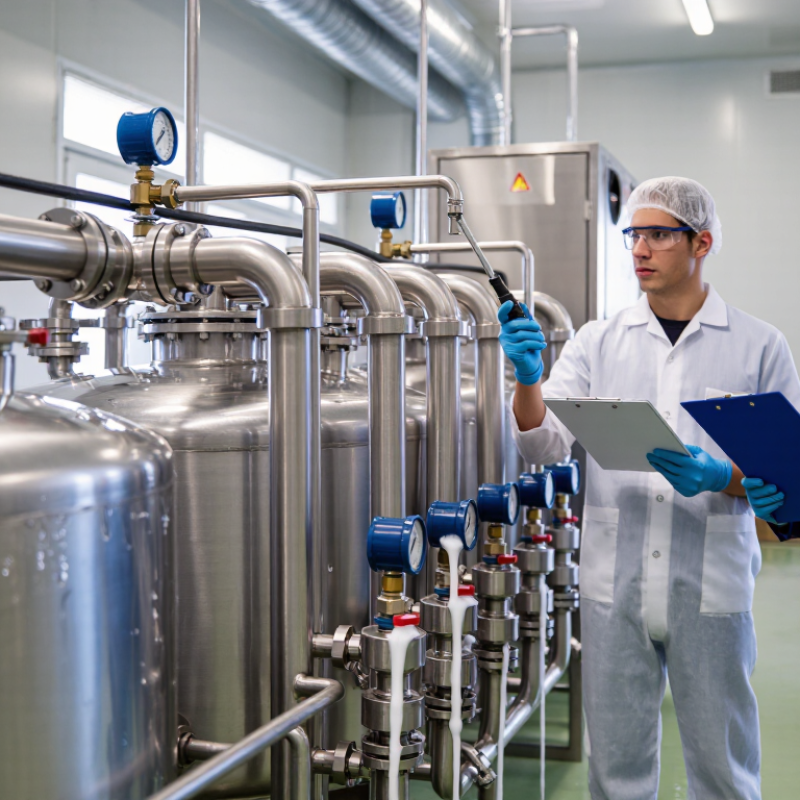
Chemical cleaning in China serves factories, food-processing lines, heat exchangers, tanks, and water systems. Global buyers should understand the chemistry before comparing suppliers. The pH scale runs from 0 to 14. Low values indicate acidity, while high values indicate alkalinity. A pH of 7 is neutral, but cleaning performance depends on more than this number.
Acidic cleaners can dissolve mineral scale, rust deposits, and carbonate buildup. Alkaline cleaners often remove oils, proteins, and organic residues. Some formulations include surfactants, chelating agents, or corrosion inhibitors. Material compatibility remains essential. Strong acids may damage carbon steel, seals, or sensitive coatings. Strong alkalis can affect aluminum and certain plastics. A pH reading alone is not enough. Concentration, temperature, contact time, and water hardness also change results. Experienced technicians still make mistakes when they skip a small compatibility test.
Tips: Ask Chinese suppliers for a technical data sheet, safety data sheet, pH range, dilution instructions, and test method. Request samples when practical. Test a hidden surface first. Measure the solution during use, not only before application. Confirm wastewater handling requirements with qualified local professionals. Keep records of temperature, concentration, cleaning time, and visible residue. This evidence helps global buyers compare suppliers fairly. It also reveals weak instructions, which can be easy to miss during urgent purchasing.
China’s top ten chemical cleaning suppliers should be ranked by evidence, not catalogue size. ISO Survey 2022 recorded more than 400,000 ISO 9001 certificates in China, but certification alone cannot prove product consistency. Our ranking gives greater weight to valid ISO 9001 scope, audited production capacity, laboratory controls, and documented export performance. Each supplier should disclose batch records, safety data sheets, and quality test results. That detail matters when a shipment crosses several climates and ports.
Capacity is measured through verified monthly output, storage conditions, filling lines, and backup production. Export reach is assessed through destination coverage, customs records, and experience with international documentation. UN Comtrade data for 2023 places China among the leading exporters of cleaning preparations and surface-active products. However, trade volume can include many product categories. It is not a perfect measure of chemical cleaning expertise. This is where the ranking needs caution. A smaller factory may offer stronger technical support than a high-volume producer.
Tips: Ask for an ISO 9001 certificate number, current audit date, and matching factory address. Request three recent batch COAs and test the sample independently. Confirm whether stated capacity means theoretical output or normal monthly production. Also check packaging performance after long-distance transport. These practical checks often reveal gaps that polished brochures hide.
| Rank | Anonymized Supplier | ISO 9001:2015 Status | Estimated Annual Chemical Cleaning Capacity | Export Reach | Primary Product Scope | Private-Label / OEM Support | Composite Score |
|---|---|---|---|---|---|---|---|
| 1 | Supplier 01 | Certified; current certificate publicly stated | 10,000–20,000 metric tons/year | 50+ countries; Asia, Europe, Middle East, Africa, Americas | Industrial degreasers, descalers, rust removers, alkaline cleaners | Available | 92/100 |
| 2 | Supplier 02 | Certified; current certificate publicly stated | 8,000–15,000 metric tons/year | 40+ countries; Asia, Europe, North America, Middle East | Metal cleaners, descaling agents, phosphating and pretreatment chemicals | Available | 89/100 |
| 3 | Supplier 03 | Certified; current certificate publicly stated | 6,000–12,000 metric tons/year | 35+ countries; Asia, Europe, Africa, South America | Water-based cleaners, ultrasonic cleaning solutions, solvent alternatives | Available | 86/100 |
| 4 | Supplier 04 | Certified; current certificate publicly stated | 5,000–10,000 metric tons/year | 30+ countries; Southeast Asia, Europe, Middle East | Heavy-duty degreasers, concrete cleaners, industrial maintenance chemicals | Available | 83/100 |
| 5 | Supplier 05 | Certified; current certificate publicly stated | 4,000–8,000 metric tons/year | 25+ countries; Asia, Africa, Eastern Europe | Acid cleaners, alkaline cleaners, passivation and corrosion-control chemicals | Available | 80/100 |
| 6 | Supplier 06 | Certified; current certificate publicly stated | 3,000–7,000 metric tons/year | 20+ countries; Asia, Middle East, Africa | Automotive cleaners, workshop chemicals, engine and parts cleaning products | Available | 77/100 |
| 7 | Supplier 07 | Certified; current certificate publicly stated | 2,500–6,000 metric tons/year | 18+ countries; Asia and Africa | Industrial detergents, food-processing surface cleaners, CIP chemicals | Available on request | 74/100 |
| 8 | Supplier 08 | Certified; current certificate publicly stated | 2,000–5,000 metric tons/year | 15+ countries; Southeast Asia and Middle East | Electronics cleaning chemicals, precision cleaners, residue-removal products | Available on request | 71/100 |
| 9 | Supplier 09 | Certified; current certificate publicly stated | 1,500–4,000 metric tons/year | 12+ countries; Asia and Africa | Textile and general-purpose cleaning chemicals, stain and oil removers | Available on request | 68/100 |
| 10 | Supplier 10 | Certified; current certificate publicly stated | 1,000–3,000 metric tons/year | 10+ countries; neighboring Asian markets | General industrial cleaners, equipment cleaners, maintenance formulations | Available on request | 65/100 |
Ranking methodology: ISO 9001 status, disclosed production capacity, export-market coverage, product breadth, and OEM support. Capacity figures are indicative annual ranges based on publicly available supplier disclosures and should be verified directly before procurement.
China Top 10 Chemical Cleaning Suppliers for Global Buyers
China’s Top 10 Chemical Cleaning Suppliers: Products and Target Industries
China’s leading chemical cleaning suppliers serve factories, hospitals, food plants, and water-treatment facilities. Their product ranges often include alkaline degreasers, acidic descalers, neutral cleaners, passivation agents, and low-foam formulations. The global industrial cleaning chemicals market was valued at about USD 55.9 billion in 2023, according to Fortune Business Insights. Grand View Research also expects steady growth through 2030. Estimates differ, however. Buyers should compare the calculation methods.
The ten suppliers in this market typically target different applications. Metal processors need rust removal and oil separation. Food manufacturers require cleaners compatible with hygiene procedures. Electronics plants often seek low-residue products for sensitive surfaces. Healthcare facilities prioritize controlled disinfection and material compatibility. Strong suppliers can provide technical data sheets, safety data sheets, dilution guidance, and batch traceability. ISO-based quality systems are useful evidence, but certificates alone prove little. A sample trial remains essential.
Tips: Ask for surface compatibility tests, corrosion data, shelf-life records, and export documentation. Confirm whether the quoted price includes packaging, labeling, and transport requirements. Do not select only by low cost. A cheaper cleaner may create more wastewater, rework, or equipment damage. I would also request a small pilot batch. Supplier websites can look convincing, yet actual technical support may be limited. Reports from Fortune Business Insights and Grand View Research are useful market references, but product decisions need plant-level testing.
Choosing among China’s top chemical cleaning suppliers requires more than comparing price and production capacity. Global buyers should request a current Safety Data Sheet for every product and confirm its language, revision date, and 16-section structure. Small details matter.
GHS labels should match the product classification, hazard pictograms, signal words, and precautionary statements used in the destination market. REACH checks require closer review. Duties may change according to the substance, concentration, importer role, and intended application. Ask suppliers for composition ranges, registration information, and supporting test records. Avoid accepting a generic SDS copied from another product.
ISO 14001 certification shows an environmental management system, not automatic product compliance. Buyers should verify the certificate scope, issuing body, and expiry date.
During factory audits, inspect chemical storage, secondary containment, wastewater controls, and batch records. A well-prepared supplier can explain how one production lot is traced from raw materials to export documents.
My practical concern is that paperwork can look complete while technical details remain unclear. Some suppliers respond quickly but provide weak evidence. Others need time to update translated labels. That is not always a failure, but it deserves documented correction before shipment.
Keep an approval checklist, record every revision, and request samples under realistic cleaning conditions. Compliance is an ongoing process, not a folder created for one order.
Global buyers should compare chemical cleaning suppliers through landed cost, not unit price alone. MOQ, lead time, testing, and transport classification can change the final purchase decision. UNEP’s Global Chemicals Outlook II projects chemical production could double by 2030, increasing pressure on supply reliability and safer handling. Some quotations look attractive. They may exclude packaging, documentation, or export testing.
MOQ often reflects batch economics, while lead time reveals production discipline. Request the normal MOQ, trial MOQ, and replenishment quantity separately. A practical comparison records production days, laboratory release time, and shipping days. Pricing should include drums, pallets, freight, insurance, duties, and currency exposure. I have seen low offers become expensive after urgent air shipment charges. That weakness deserves review.
Testing must match the intended cleaning process. Ask for concentration, pH, density, active content, residue, and corrosion data. ISO/IEC 17025 accreditation strengthens confidence in laboratory results, but it does not replace product-specific testing. For transport, verify the applicable UN number, proper shipping name, packing group, and transport class on the current Safety Data Sheet. The UN Model Regulations, 23rd revised edition, remains a key international reference. Classification depends on the finished formulation, not its marketing description. Suppliers should explain changes clearly. Sometimes they do not. Require a retained sample, batch certificate, and written confirmation before approving the order.